Learning how to choose the right foundation shade can change the whole look of your makeup. The right shade should disappear into your skin, even out your tone and leave you looking like yourself — only a little more polished. The wrong shade, by contrast, can leave a visible line at the jaw, make your face look grey, orange or ashy, and undo an otherwise careful routine. This step-by-step guide explains how to find your undertone, test shades correctly, match your depth and choose a finish that suits your skin, so you can shop with confidence and stop guessing at the counter.
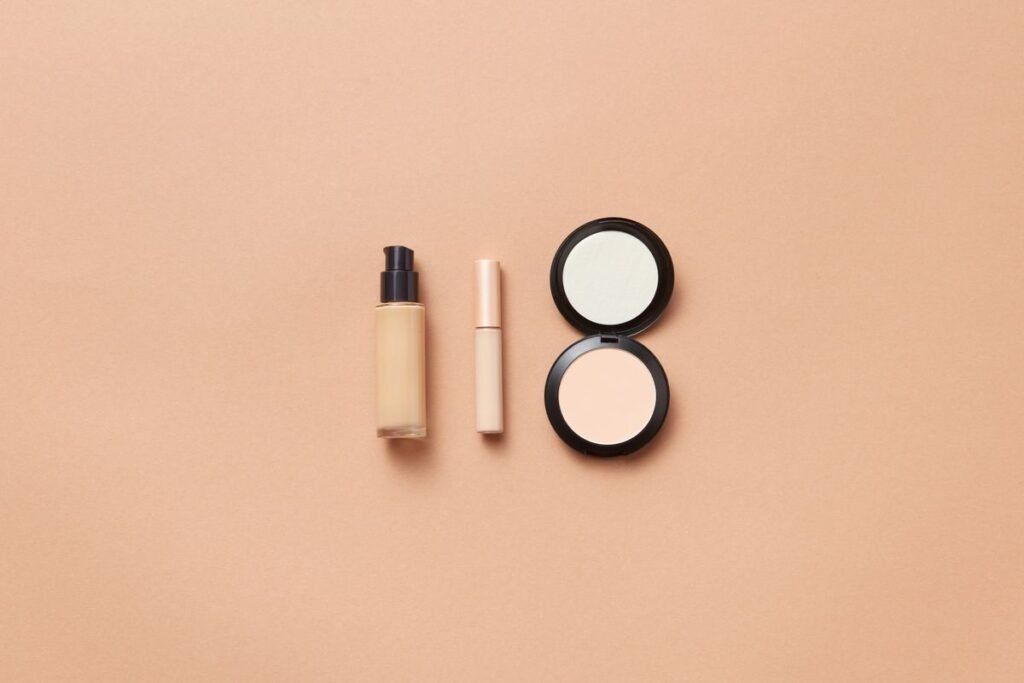
Step 1: Find Your Undertone Before You Choose a Foundation Shade
Your undertone is the subtle colour beneath the surface of your skin, and it stays broadly the same even when your skin tans or pales. It matters more than the depth of your skin, because two people with the same light, medium or deep skin tone can need completely different foundation shades. If a foundation looks too yellow on you, too pink, or strangely grey, the undertone is usually the problem, not the depth.
There are three main undertones. Warm undertones lean golden, peachy or yellow. Cool undertones lean pink, rosy or blue. Neutral undertones sit in between, with neither gold nor pink clearly winning. Most foundation ranges label shades with letters to help you: W or G often means warm or golden, C or R means cool or rosy, and N means neutral. Those letters are a useful starting point, but always check the shade on your own skin, because brands do not all use the same system.
Three quick ways to check your undertone
- Look at your veins in natural light. Veins that look green usually point to a warm undertone, veins that look blue or purple usually point to a cool undertone, and veins that are hard to place often mean a neutral undertone.
- Try the jewellery test. If gold jewellery flatters your skin and makes it look warm and healthy, you probably have a warm undertone. If silver looks better, you probably have a cool undertone. If both look good, you are probably neutral.
- Hold white and off-white fabric near your face. Bright white that makes your skin look fresh and clear often suits cool undertones, while soft off-white or cream that looks kinder against your skin often suits warm undertones. If both work, neutral is a good bet.
Also think about how your skin reacts to the sun. Skin that tans easily and rarely burns often has a warm undertone, while skin that burns easily and tans slowly often has a cool undertone. No single test is perfect, so use two or three together and look for the pattern they agree on.
Step 2: Work Out Your Depth and Skin Tone
Depth is simply how light or deep your skin is, from fair and light through medium and tan to deep. Your undertone and your depth work together: a fair warm shade, for example, is very different from a deep warm shade. Look at your bare skin in daylight, without makeup, and compare it with the shade names on the bottles rather than the colour of the liquid in the bottle, which can look darker than it applies.
Choose two or three shades that look close to your depth and in the right undertone family. That shortlist is what you will test properly in the next step. If you are between two depths, keep both, because one may be right for winter and the other for summer. It is far better to test three close shades than to buy one shade on a guess and hope it blends away.
Step 3: How to Choose the Right Foundation Shade by Testing It Properly
Testing is where most foundation mistakes happen, so take your time here. Always test on your jawline, not on the back of your hand. Your hand is a different colour from your face, and a shade that looks perfect there can look wrong on your cheek. Draw a short stripe of each shortlisted shade along your jawline, blending each one slightly downwards towards your neck, then step back and look in natural daylight.
- Test three shades side by side. Put your best guess in the middle, one shade lighter on one side and one shade deeper on the other, so the difference is easy to see.
- Blend and wait. Blend each stripe fully, then wait ten to fifteen minutes. Some foundations darken slightly as they dry, a change called oxidisation, and a shade that matches at first can end up too dark.
- Check in natural light. Shop lighting can be warm and flattering, so check the stripes near a window or outside in daylight. The right shade should disappear into your skin, with no visible edge between your face and your neck.
- Check the neck, not just the face. The goal is a shade that matches your face and neck together. If you can see where the foundation stops, it is the wrong shade, even if it looks lovely on your cheek alone.

If you cannot test in store, order samples or the smallest size first, and try the shade at home in daylight before you commit to a full bottle. When you are shopping online, look for swatches on skin tones close to yours, read the undertone description rather than the shade name alone, and check whether the brand offers a shade finder or a returns policy for the wrong shade.
Step 4: Match the Shade to Your Skin Type
The right shade in the wrong formula will still look wrong, so think about your skin type as well. Oily skin often suits a matte or oil-free foundation, because shine can make a shade look darker and patchier by the end of the day. Dry skin usually looks better in a hydrating, satin or dewy formula, because a very matte foundation can cling to dry patches and make the colour look uneven. Combination skin often works well with a satin finish, with powder only where you need it.
If your skin is sensitive or prone to breakouts, look for a fragrance-free, non-comedogenic formula and patch-test it first. Prepare your skin before you judge a shade, too: cleanse, moisturise and let your moisturiser sink in, then apply a primer if you normally use one. A shade tested on bare, dry skin can look very different once your usual skincare is underneath it.
Step 5: Choose the Right Finish and Coverage
Finish describes how the foundation looks on your skin once it sets. A matte finish has almost no shine and suits oily skin and long days. A dewy finish looks fresh and glowing and suits dry or mature skin. A satin or natural finish sits in between and suits most skin types, which is why it is a safe choice if you are unsure. The finish can also change how a shade reads: a dewy foundation can look a little lighter and brighter, while a matte one can look a little deeper once it sets.
Coverage is separate from finish. Sheer coverage evens out your tone while letting freckles and your natural skin show through, and it is the most forgiving choice if your shade is slightly off. Medium coverage hides redness and uneven tone while still looking like skin. Full coverage hides blemishes and pigmentation, but it also shows a wrong shade more clearly, so the match needs to be exact. If you are still building your routine, our Makeup for Beginners guide explains how foundation fits into a simple, everyday routine.

Common Foundation Shade Mistakes to Avoid
- Testing only on your hand or wrist. Your hand is not the same colour as your face, so a hand swatch can only tell you about texture and undertone, never the final match.
- Choosing a shade in shop lighting. Warm shop lights can hide a shade that is too pink, too yellow or too dark. Always check in daylight before you buy.
- Picking a shade that is too light. A shade that is too pale can make skin look grey or ashy, especially on medium and deep skin tones. The right shade should match, not lighten.
- Ignoring oxidisation. If your foundation looks perfect in the morning and orange by lunch, it is probably oxidising. Test it for a few hours before you decide.
- Forgetting your neck and chest. Your face, neck and chest can be slightly different colours. Blend down the neck and check that the foundation connects them smoothly.
- Changing everything at once. If you change your shade, your primer and your powder at the same time, you will not know which one caused the problem. Change one thing, test it, and then move on.
How to Adjust Your Foundation Shade Through the Seasons
Most of us need a slightly different foundation shade in summer and winter. Skin usually deepens a little in summer, even with sunscreen, and lightens again in winter. Rather than buying a new bottle every season, keep two shades — your winter shade and a shade one step deeper — and mix them to match your skin as it changes. A drop of the deeper shade in spring, and a little more in high summer, keeps the match smooth without waste.
You can also adjust a shade that is slightly too light with a little bronzer on the edges of the face, or a shade that is slightly too deep by mixing in a drop of moisturiser or a lighter shade. These tricks help, but they cannot rescue a shade that is far too dark or in the wrong undertone, so keep them for small adjustments only. For a special occasion, when the match matters even more in photographs, see our Bridal Makeup guide, and for a lighter everyday look, our Everyday Natural Makeup Look guide shows how a well-matched base can stay soft and natural.
Frequently Asked Questions About How to Choose the Right Foundation Shade
Should I match foundation to my face or my neck?
Match it to both. Test on your jawline and blend towards your neck, and choose the shade that disappears between the two. If your face and neck are different colours, choose the shade that sits between them and blend it well.
What if I am between two shades?
Buy the lighter shade if you are unsure, because it is easier to warm up a slightly light foundation with bronzer than to lighten a shade that is too dark. Better still, buy both and mix them — that is often the most accurate match of all.
Why does my foundation look orange after a few hours?
That is usually oxidisation, where the foundation darkens and turns warmer as it reacts with your skin and the air. Test shades for a few hours before buying, try a different formula, and use a primer and a light setting powder to slow the change.
Can I choose a foundation shade online?
Yes, if you are careful. Use your undertone, your current shade in another brand, swatches on similar skin tones and the brand’s shade finder. Order a sample or the smallest size first, and test it in daylight at home before you commit.
How often should I change my foundation shade?
Check your match at the start of summer and winter, and whenever your skin tone changes noticeably. Your undertone stays the same, but your depth can shift with the seasons, so a quick jawline test twice a year is enough for most people.
The Bottom Line
Knowing how to choose the right foundation shade comes down to three things: find your undertone, test on your jawline in natural light, and give the shade time to settle before you decide. Take those steps, keep a summer and a winter shade if your skin changes with the seasons, and your foundation will stop being a guessing game and start being the quiet, invisible base your whole makeup look deserves.
Photo credits: Make Up on Beige Background by DS stories on Pexels; Closeup of a Woman Testing a Liquid Foundation on Her Hand by Alena Darmel on Pexels; A Close-up Shot of a Man with Concealer on His Cheek by MART PRODUCTION on Pexels.