Introduction
Frozen nails have become one of the most searched nail trends for women who want a manicure that looks cool, glossy, and almost otherworldly. The look draws inspiration from ice, frost, and snow, using icy blues, silvers, and shimmering finishes that mimic the way light bounces off a frozen surface. Unlike a typical winter manicure, frozen nails focus on texture and shine rather than heavy decoration, which makes the trend feel modern and wearable well beyond the colder months. This guide breaks down 25 frozen nail ideas, ranging from subtle icy shimmer to bold frosted designs, along with tips on choosing the right polish, finish, and shape to pull off the look at home or in a salon chair. Whether you want a full icy manicure or just a hint of frost on one accent nail, you will find a design here that fits your personal style, your skill level, and the amount of time you want to spend on application. By the end of this guide, you’ll also know exactly which products to reach for to make your frozen nails last as long as possible.
What Makes a Manicure “Frozen”?
Before jumping into the list, it helps to understand what actually separates frozen nails from a regular winter manicure. The term gets used loosely online, but true frozen nails share a few specific characteristics that set them apart from generic cool-toned polish.
Frozen nail designs typically include:
- Cool color palettes – Icy blues, silvers, whites, and pale purples instead of warm reds, oranges, or golds
- Reflective finishes – Chrome, holographic, or metallic polish that catches light the way real ice does
- Frosted textures – Matte or crystalline effects that resemble frost forming on glass
- Sheer, glassy layers – Translucent polish that mimics melting ice or a thin frozen surface
- Shimmer and sparkle – Fine glitter that resembles snow, frost crystals, or fine ice particles
Understanding these five elements makes it much easier to recreate any of the frozen nails below, even if you’re working with basic polish at home instead of professional gel systems. Once you know what gives frozen nails their signature look, you can mix and match techniques to build your own custom design rather than copying one style exactly.
It’s also worth noting that frozen nails differ from “icy nails” in name only. Most beauty editors and nail technicians use the two terms interchangeably, so don’t worry if you see slightly different phrasing across different sources. The techniques and color families remain the same.
Now let’s get into the ideas.
1. Icy Chrome Frozen Nails
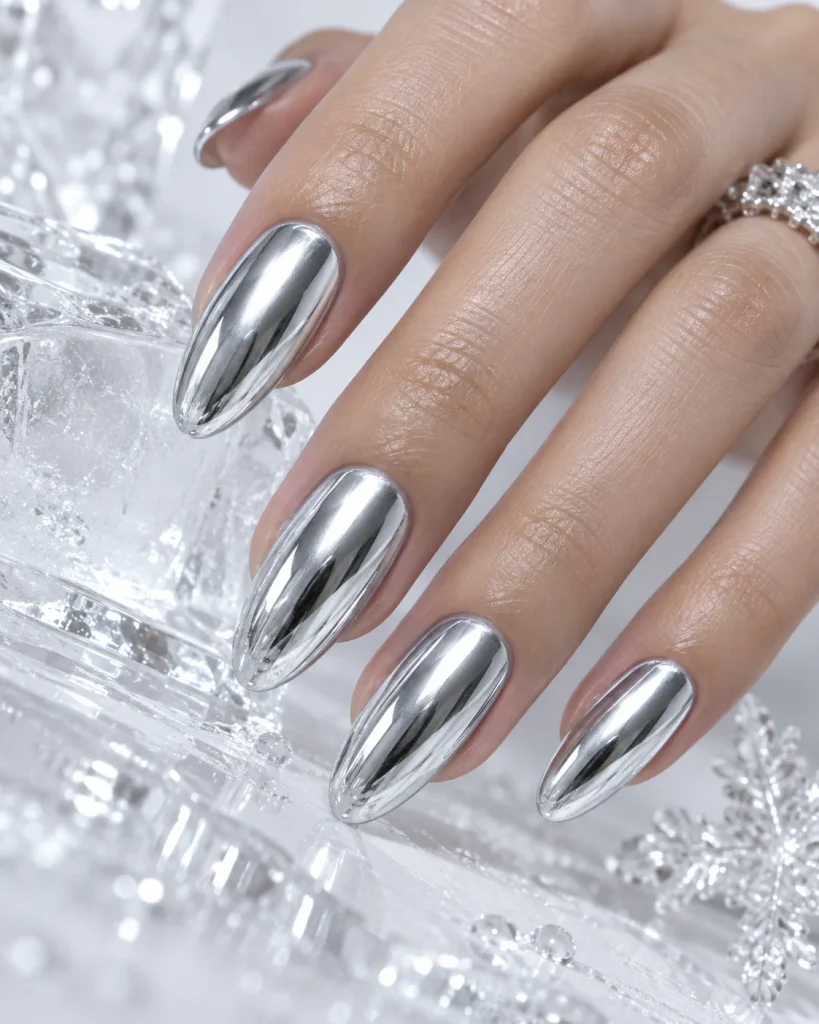
Icy chrome is the most requested version of frozen nails, and it’s easy to see why. The mirror-like silver finish looks exactly like a sheet of ice catching sunlight. This effect comes from a fine chrome powder rubbed over a dark or nude base coat, creating a reflective surface that shifts color slightly depending on the angle you view it from.
This design works on nearly any nail length and looks especially striking under indoor lighting, where the metallic shine stands out even more than it does outdoors. Many nail technicians consider icy chrome the gateway design for anyone new to the frozen nails trend, since it requires only one specialty product and delivers dramatic results almost instantly.
If you love soft, magical nail designs with a fairytale-inspired touch, you’ll also adore these Rapunzel nail ideas featuring dreamy lavender tones, golden details, and romantic feminine accents.
2. Frosted White Nails
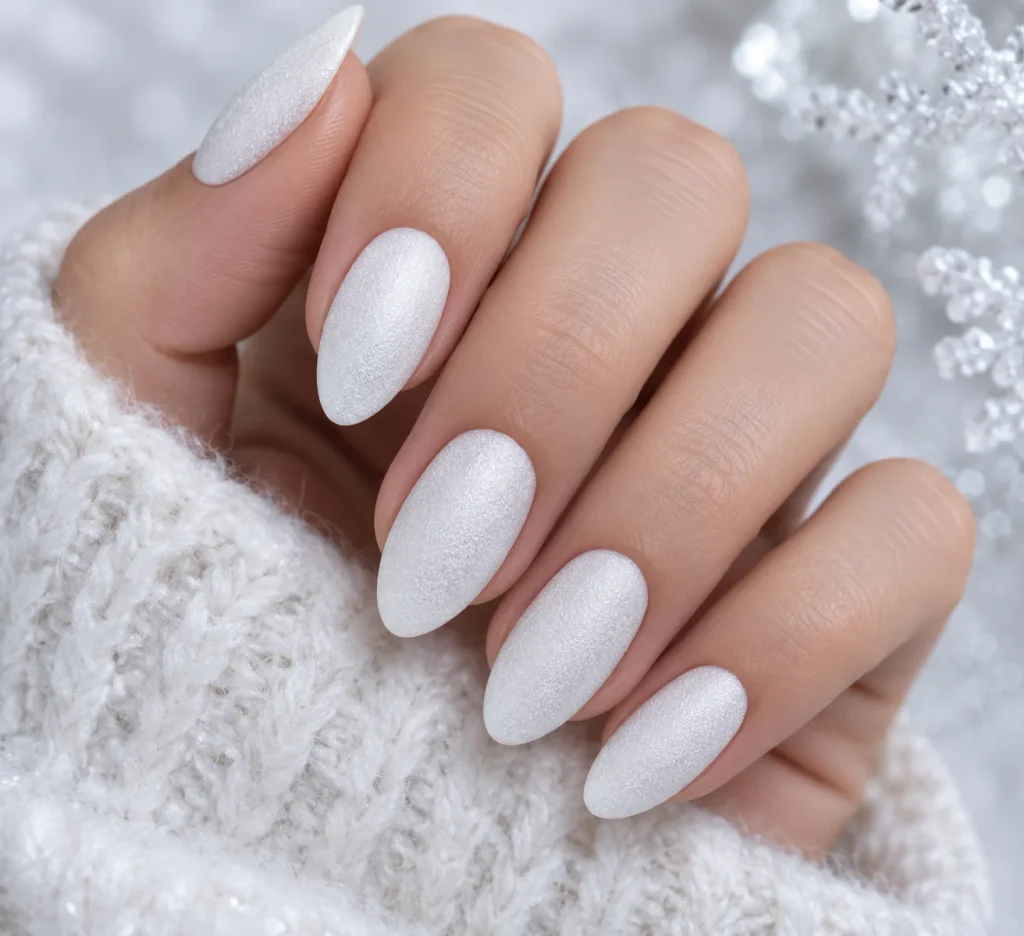
Frosted white nails use a soft, chalky white polish with a slightly textured finish that resembles frost on a window pane. Unlike glossy white polish, this version has a matte or semi-matte texture that gives it a more authentic icy appearance rather than a plain, flat white manicure.
This is one of the easiest frozen nail looks to recreate at home since it only requires two coats of a quality matte white polish and a matte top coat to seal it. Frosted white nails also photograph beautifully for Pinterest boards, since the muted texture reads clearly even in flat lighting.
3. Holographic Ice Nails
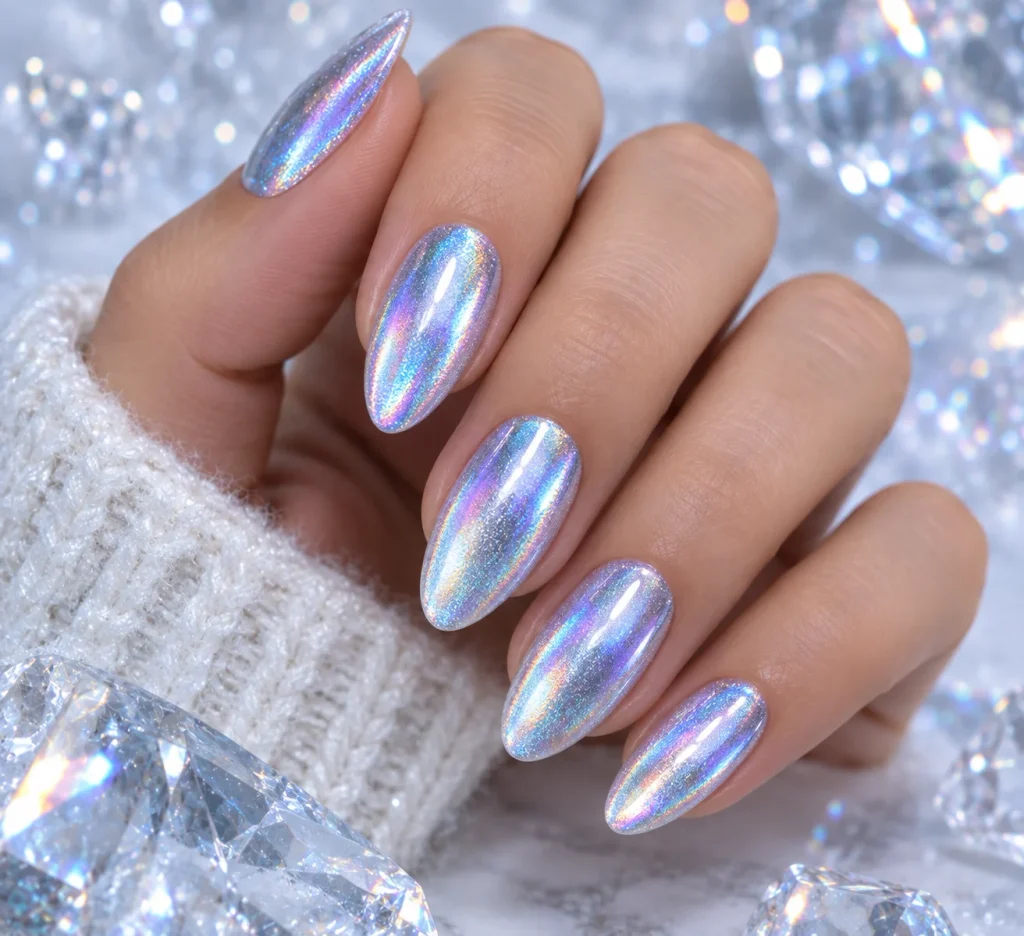
Holographic polish shifts between blue, purple, and silver depending on the light, mimicking the way ice reflects a rainbow of color in direct sunlight. This design has become popular within the frozen nails category because it adds dimension and movement without needing any additional nail art or hand-painted detail.
Holographic top coats work over almost any base color, so you can layer this effect over blue, white, or even clear polish to control how intense the shift appears. A clear base tends to produce the most subtle, icy version of this look, while a white base makes the holographic shimmer more obvious.
4. Glacier Blue Nails
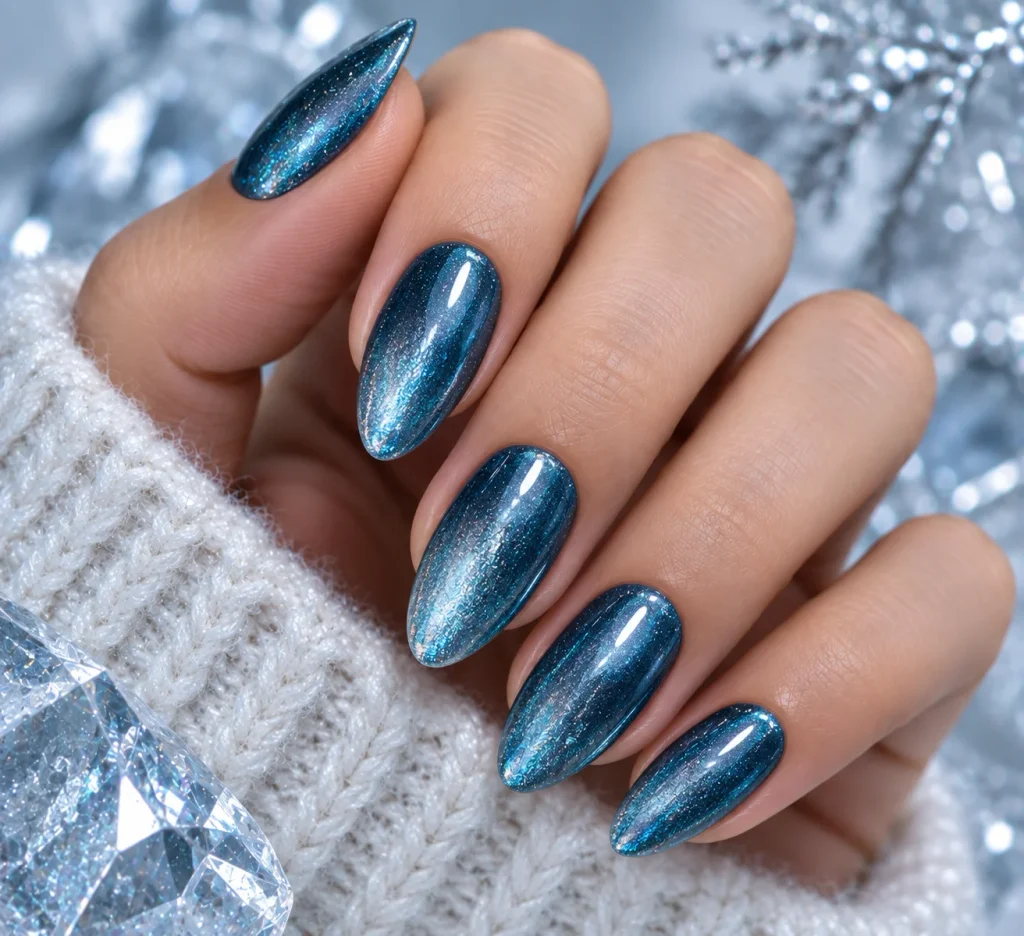
A deep, cool-toned blue with subtle shimmer creates the look of glacier ice, which often appears almost teal depending on the lighting around it. This shade works particularly well for anyone who wants a bolder take on frozen nails without going fully silver or white.
Glacier blue pairs beautifully with silver accents or a single chrome nail for added contrast within the same manicure. This color also tends to suit a wider range of skin tones than pure icy white, making it one of the more universally flattering frozen nail options on this list.
5. Crystal Clear Nails
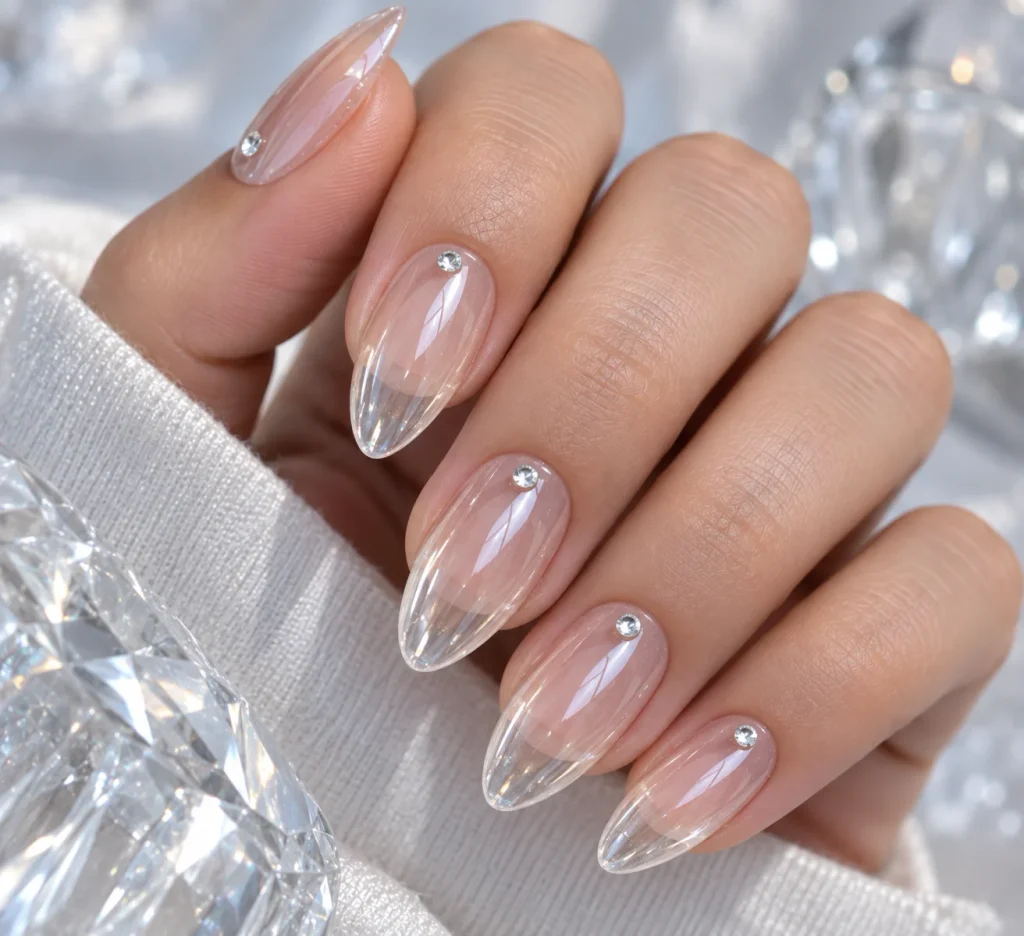
Clear, glassy nails with a high-shine top coat mimic the look of thin, transparent ice sitting over water. This minimal design relies entirely on the glossy finish rather than color, making it one of the most versatile frozen nails looks for everyday wear at work or school.
Adding a single rhinestone near the cuticle enhances the icy effect without overwhelming the simplicity of the overall design. Crystal clear nails are also the lowest-maintenance option in this entire list, since any regrowth is barely noticeable against a clear base.
6. Snowflake Accent Nails
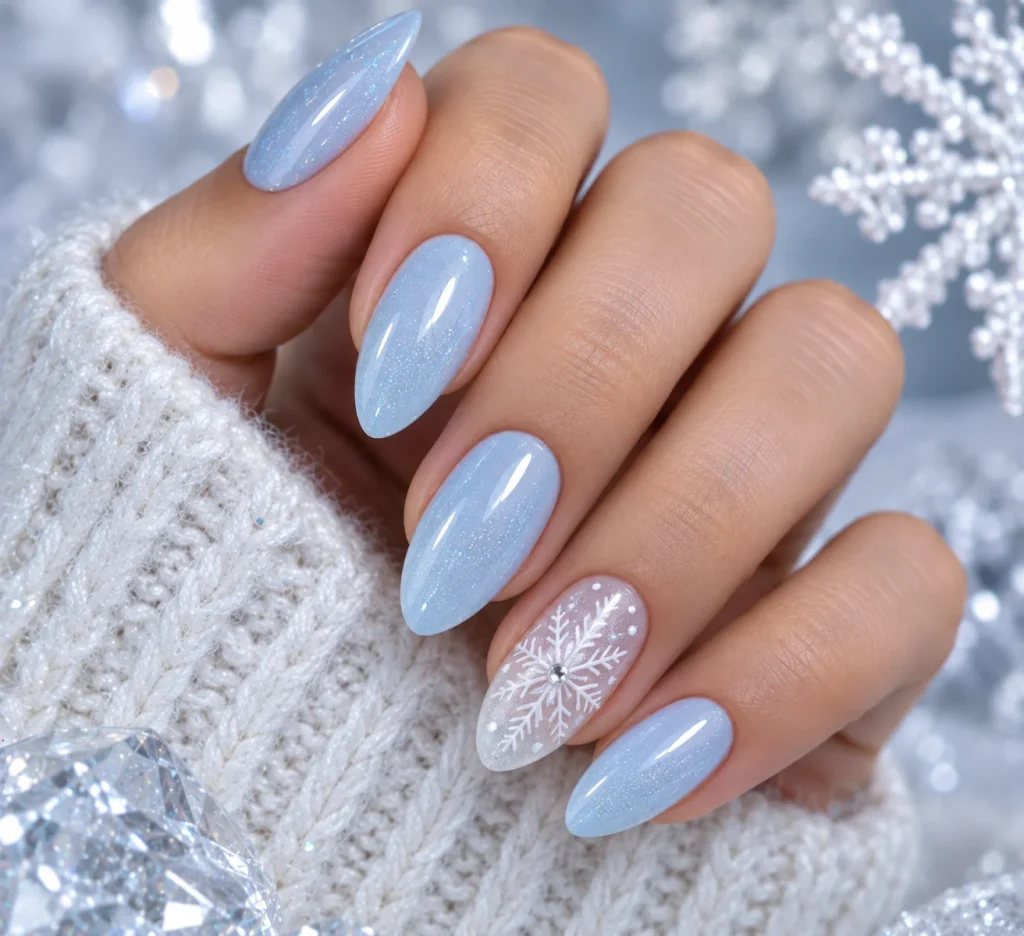
Delicate white snowflake designs painted on one or two accent nails add a decorative touch to an otherwise simple frozen manicure. This design works best on a clear, pale blue, or silver base so the snowflake detail stands out clearly against the surrounding nails.
Nail art pens make this design much easier to achieve at home compared to using a thin detail brush, since the pen’s consistent flow reduces smudging. Keeping the snowflake design to just one or two nails, rather than the full set, keeps the frozen nails look elegant rather than overly busy.
7. Frosted Glitter Nails
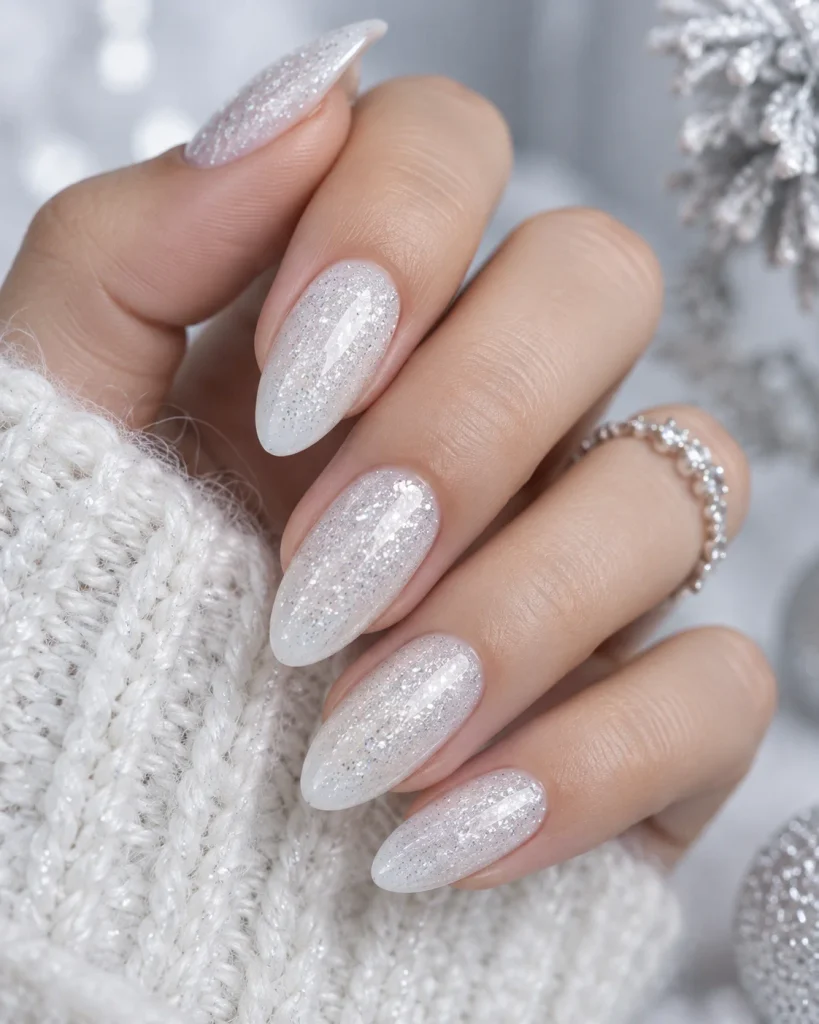
A fine, silver-toned glitter polish applied over a white or clear base creates a soft, frosted sparkle that resembles freshly fallen snow catching the light. This design adds dimension to frozen nails without the heaviness that chunky glitter often brings to a manicure.
Applying the glitter in thin layers, rather than one thick coat, keeps the texture smooth and prevents the clumpy buildup that ruins the icy effect. This technique works especially well for anyone who wants shimmer but still needs their nails to look polished for professional settings.
8. Icicle Ombre Nails
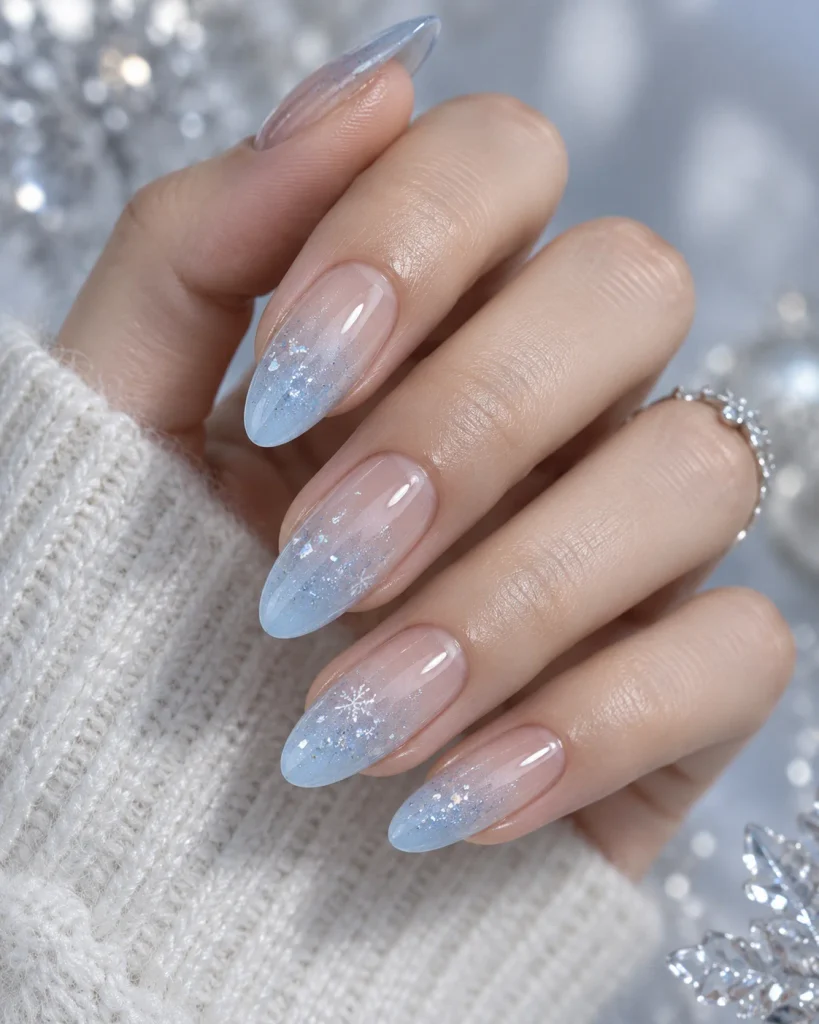
An ombre fade from clear or white at the cuticle to a pale icy blue at the tip mimics the natural gradient found in a real icicle. This technique requires a bit more skill than the earlier designs but creates one of the most visually striking frozen nail effects on this entire list.
A makeup sponge is the easiest tool for blending this gradient smoothly at home, since it distributes polish more evenly than a brush alone. Building the color gradually, in thin sponge layers, prevents harsh lines and keeps the transition looking natural rather than blocky.
9. Metallic Silver Nails
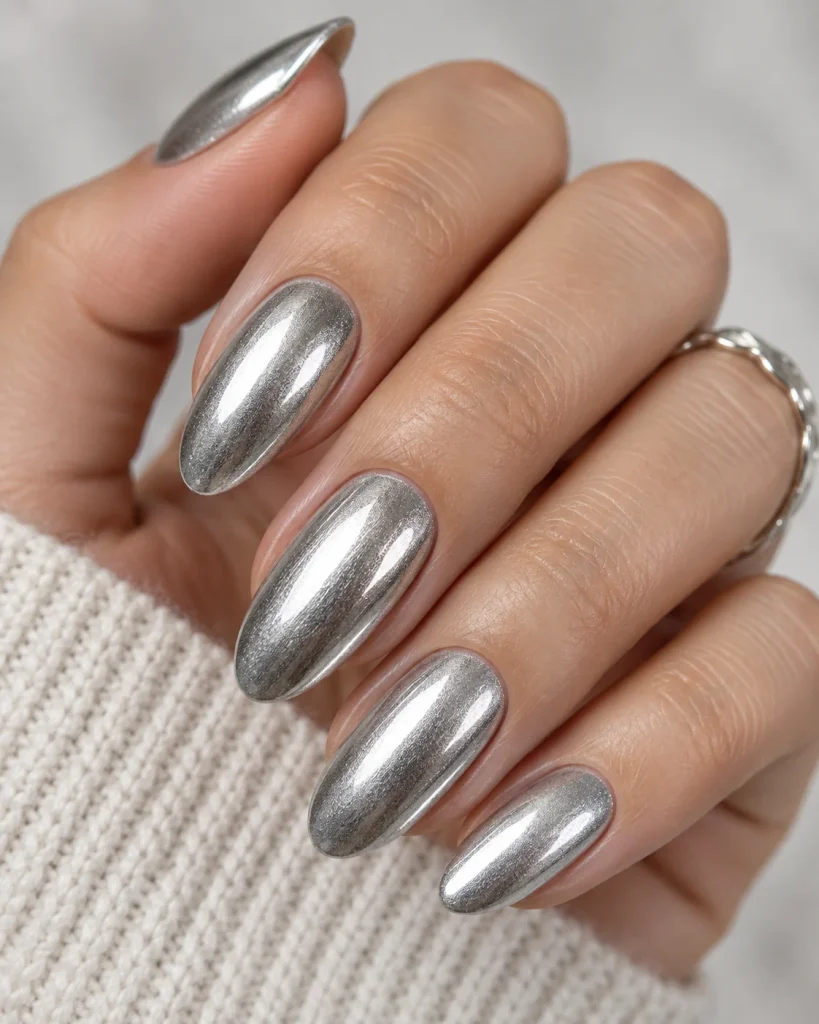
A solid metallic silver polish, without any chrome powder involved, offers a slightly softer version of the icy chrome look described earlier. This finish still catches light beautifully but has a smoother, more subtle sheen that works well for everyday wear in professional or casual settings.
Metallic silver also pairs easily with other frozen nail designs, making it a good base color for adding rhinestones, glitter accents, or a single chrome nail later. This flexibility is part of why metallic silver remains one of the most requested frozen nails shades among salon clients.
10. Pearl Frost Nails
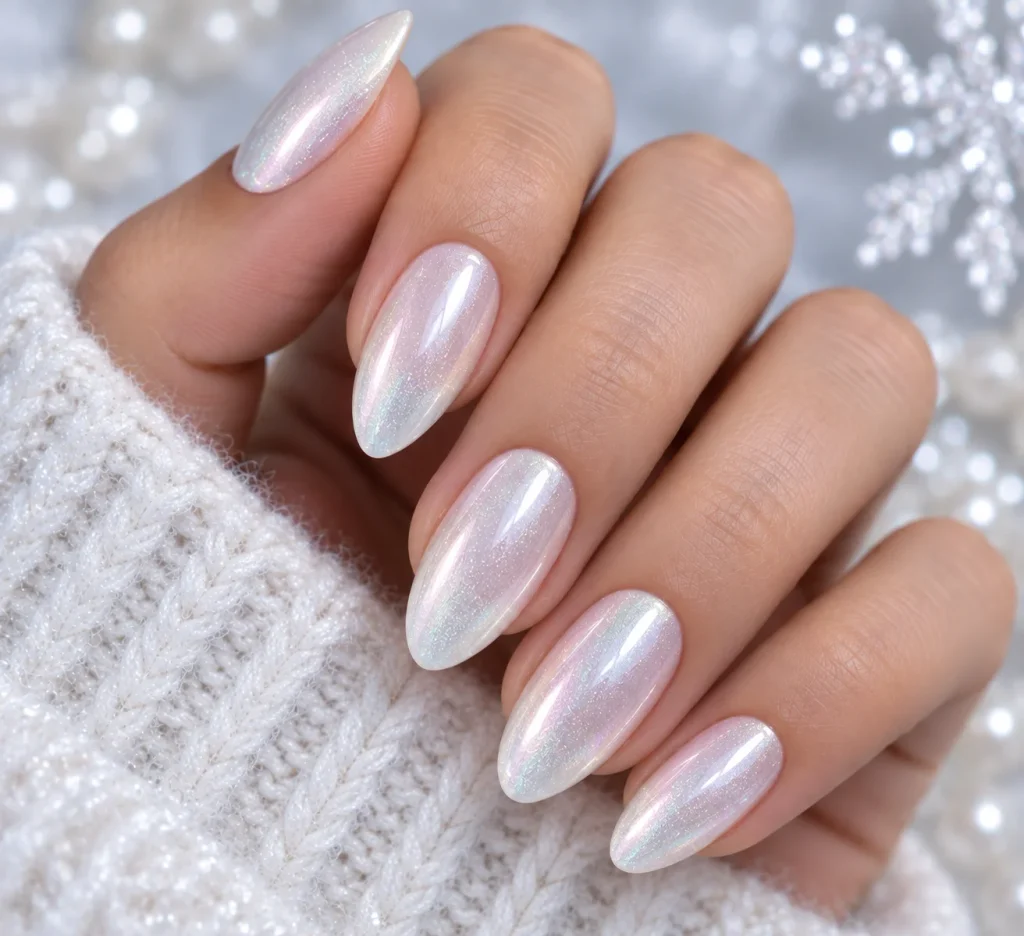
A sheer, iridescent pearl polish creates a soft glow that shifts between white, pink, and silver depending on the lighting around it. This finish resembles the way light reflects off frost-covered surfaces in early morning light, giving the nails a gentle, glowing quality.
Pearl frost nails work well for anyone who wants an icy look that’s still soft and wearable for daily activities, including work environments with more conservative dress codes. This design proves that frozen nails don’t always need to be bold or dramatic to fit the aesthetic.
11. Blue Ombre Frozen Nails
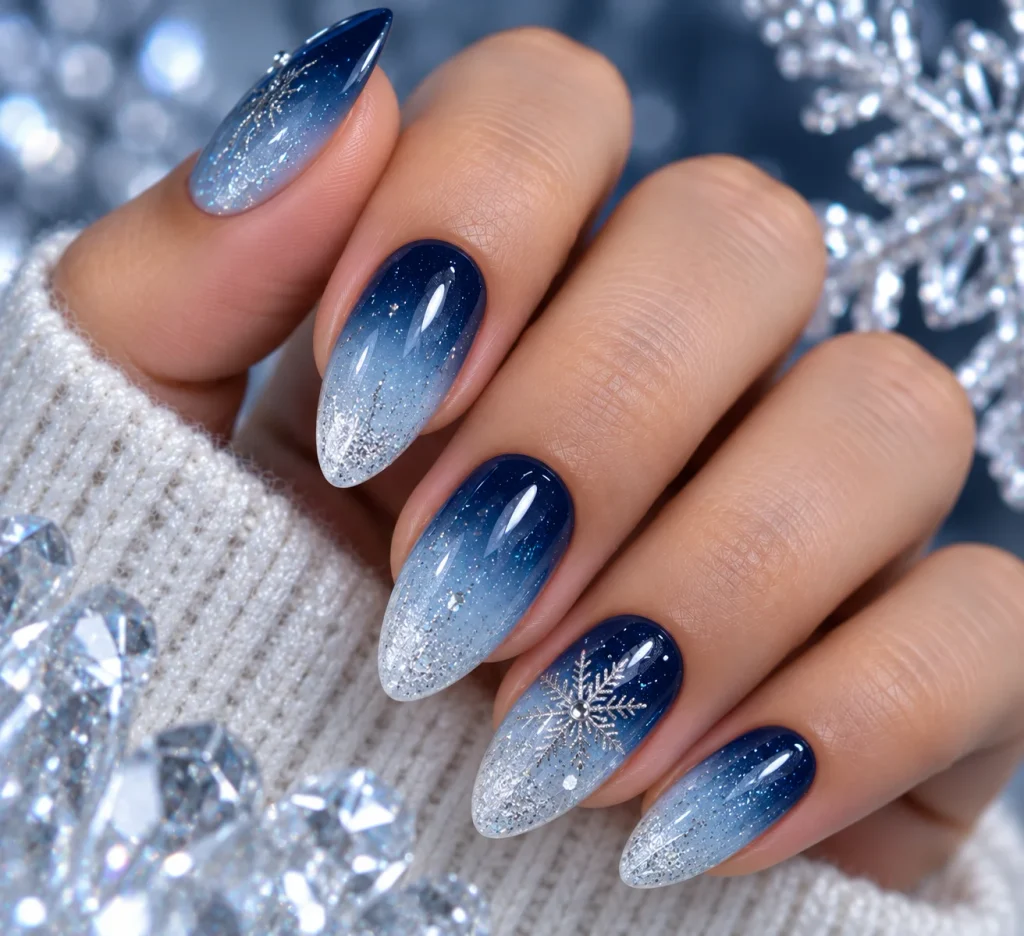
A gradient moving from deep navy at the base to pale icy blue at the tip creates a dramatic, wintry effect that resembles deep frozen water beneath a thin surface layer of ice. This design looks especially good on longer nail shapes like almond or coffin, where there’s more room to show the full color transition.
Adding a touch of silver shimmer at the tip enhances the icy contrast between the two blue tones used in this design. Many nail technicians consider this one of the more advanced frozen nail looks, since blending two saturated colors smoothly takes more practice than a simple two-tone fade.
12. Marble Ice Nails
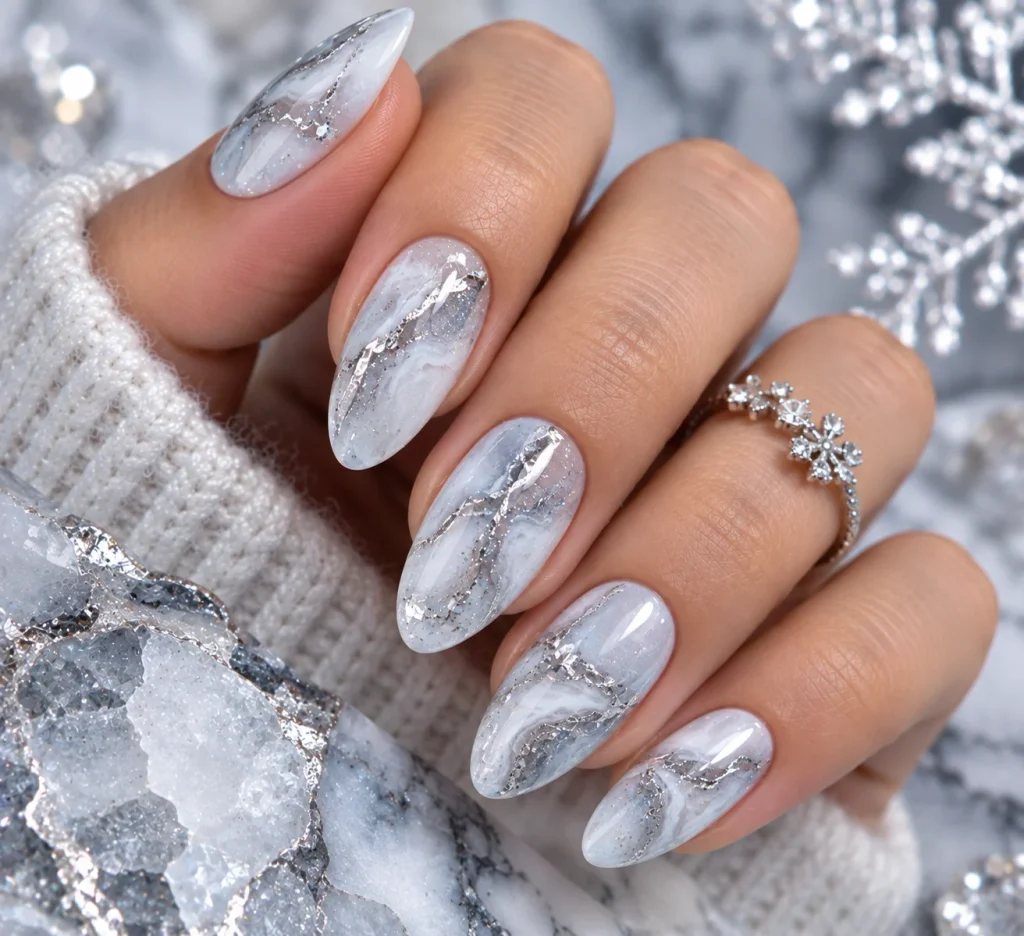
White and silver marble-effect nails mimic the natural veining found in ice and frozen stone surfaces. The irregular, swirling pattern gives each nail a unique look, which adds to the natural, organic feel that makes frozen nails so visually interesting compared to flat, single-color designs.
This design works best with a water marble technique or a dedicated marbling nail tool for clean, defined lines throughout the pattern. Because no two marble patterns turn out exactly alike, this frozen nails style also appeals to anyone who wants a manicure that feels one of a kind.
13. Cracked Ice Nail Art
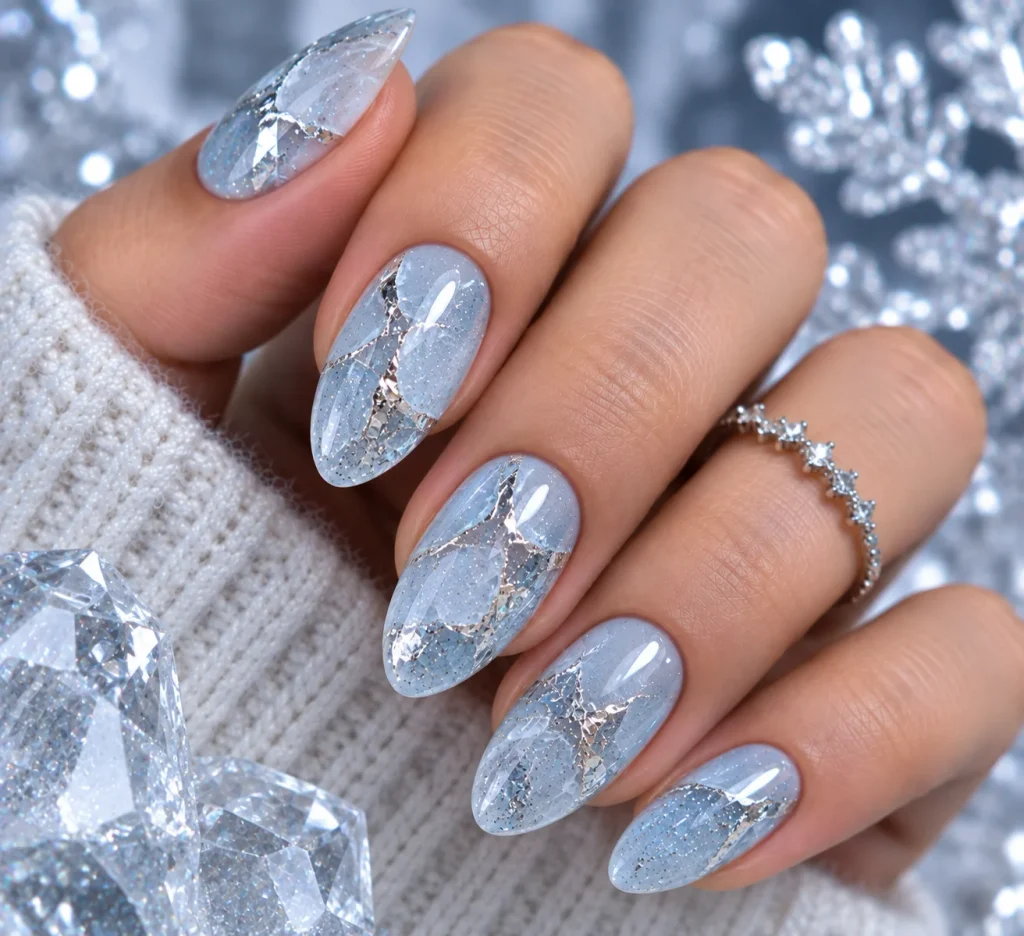
This design uses thin, irregular lines across a clear or pale blue base to mimic the look of cracked ice on a frozen lake or pond. It’s a more advanced nail art technique, but it creates a genuinely unique, conversation-starting version of frozen nails that stands out from more common chrome or glitter looks.
Silver foil pressed into the cracks adds extra shine and makes the fractured design pop even more under light. This technique takes practice to perfect, so many people choose to try it first on an accent nail before committing to a full set.
14. Diamond Dust Nails
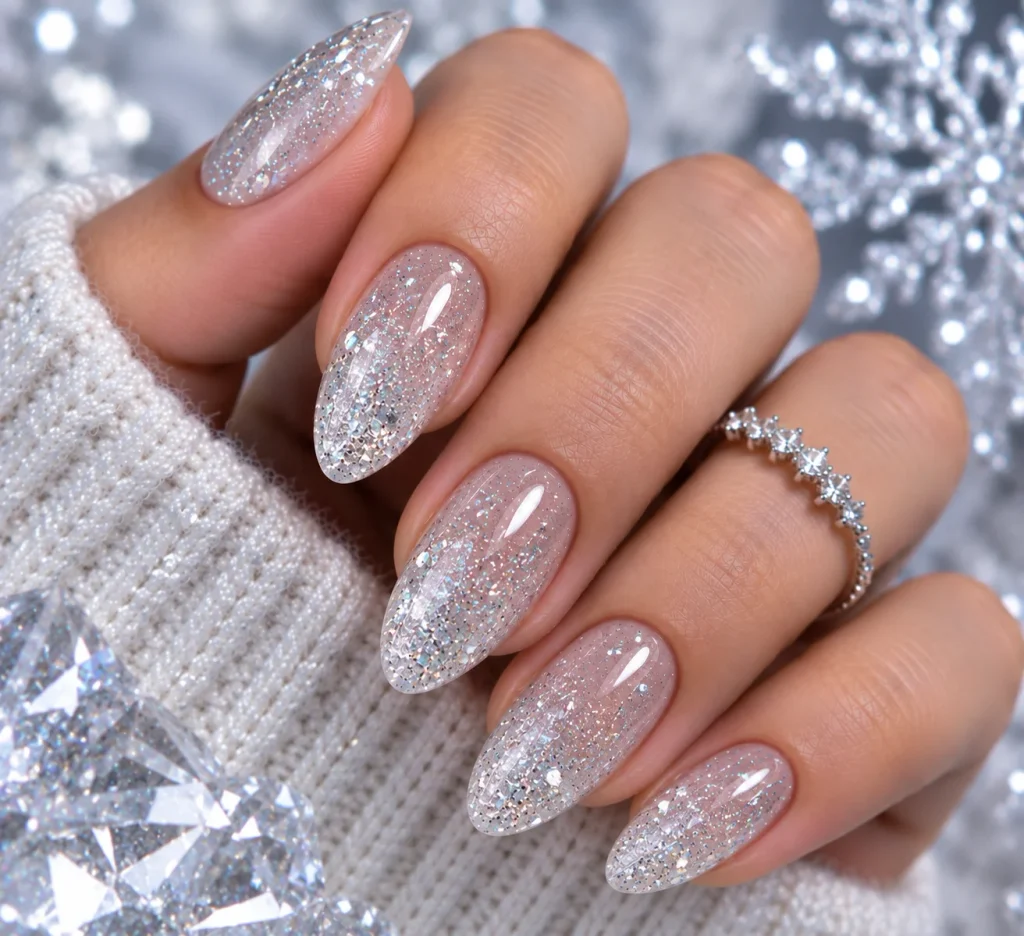
Ultra-fine, sparkling glitter applied over a clear or white base creates a shimmering effect similar to light hitting fresh snow or fine ice particles scattered across a surface. This design is subtle enough for everyday wear but still catches attention when it moves into direct sunlight.
Diamond dust glitter works best applied with a dabbing motion using a sponge applicator rather than a brush, which helps distribute the fine particles evenly. This technique is a favorite among people who want the sparkle associated with frozen nails without a heavy, obvious glitter texture.
15. Frozen French Tips
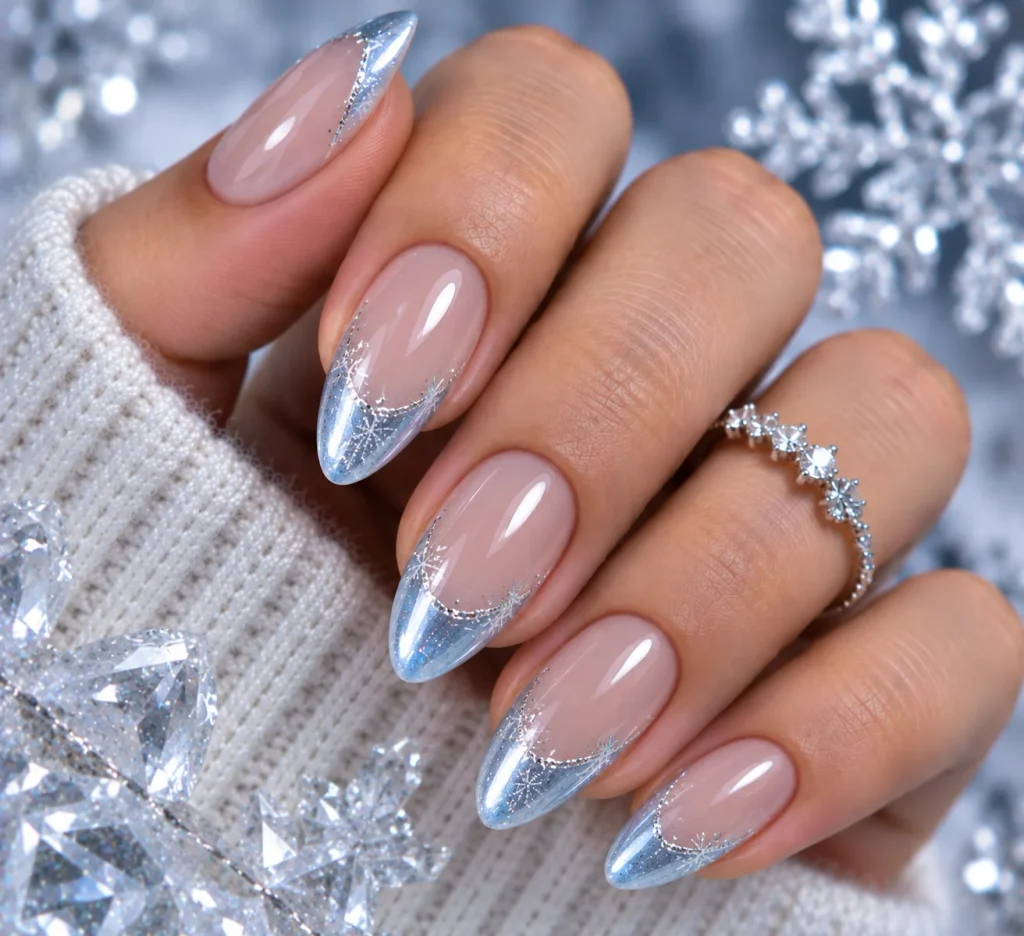
Replacing the traditional white tip with an icy blue or silver chrome tip gives the classic French manicure a cold-weather twist that still feels polished and professional. This design keeps the clean, structured look of a French manicure while incorporating the frozen aesthetic through color and finish alone.
This style works particularly well on almond or square nail shapes for a modern, refined finish that suits both casual and formal settings. Frozen French tips have become a popular middle ground for people who like the frozen nails trend but aren’t ready to commit to a full icy color across the entire nail.
16. Iridescent Glass Nails
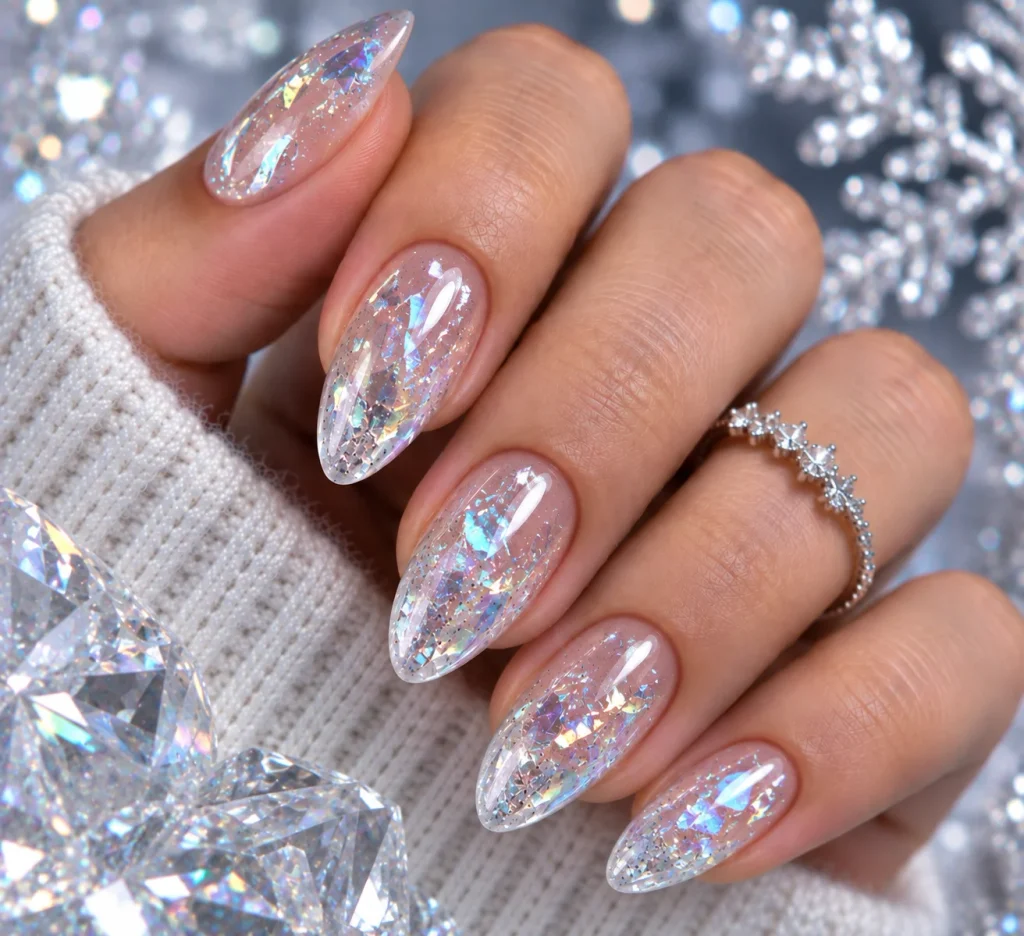
This design uses a clear, glossy base with iridescent flakes pressed into the top layer, creating a look similar to shattered glass or a thin sheet of ice. The flakes catch light differently depending on the angle, giving the nails constant movement and shine throughout the day.
Iridescent flakes are widely available in nail supply stores and are simple to apply with a cuticle stick pressed gently onto tacky polish. This design ranks among the more photogenic frozen nails options, since the flakes shift color noticeably in photos taken under different lighting.
17. Icy Lavender Nails
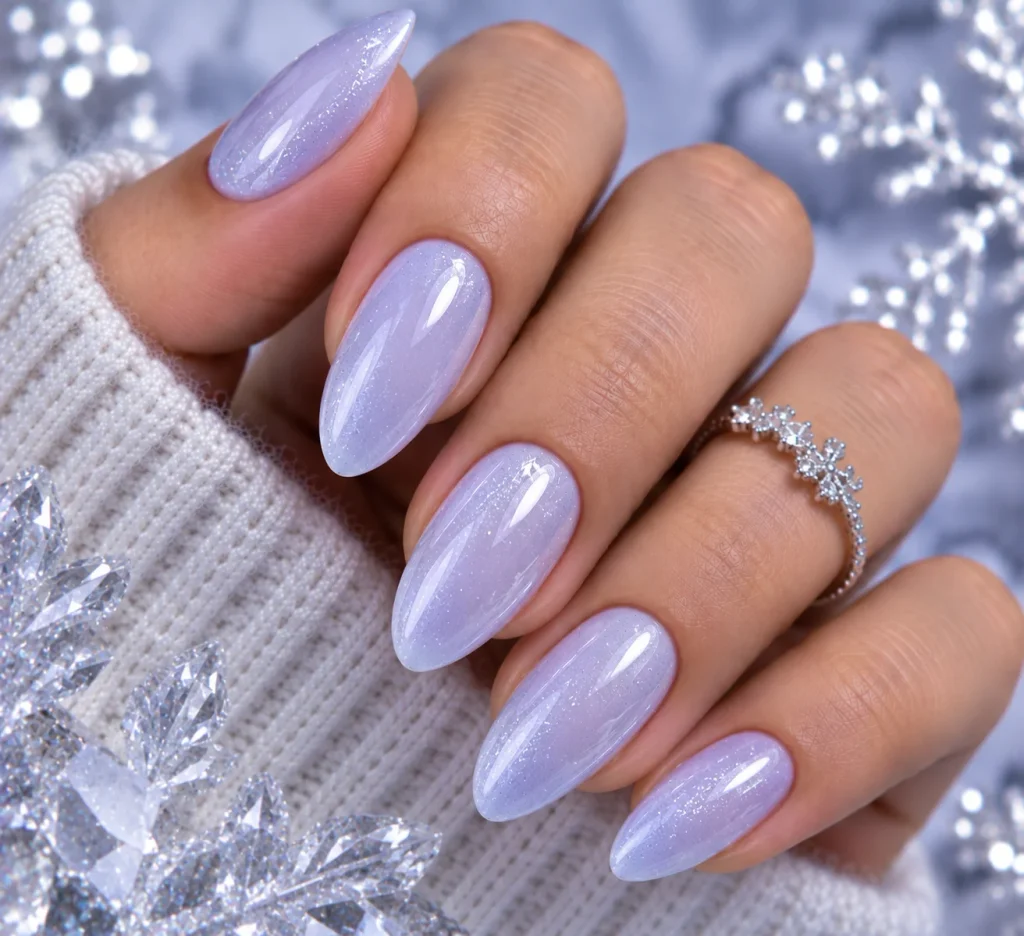
A pale, cool-toned lavender shade offers a softer alternative to traditional blue or silver frozen nails, while still reading as distinctly icy rather than warm. This color still fits within the frozen nails category but adds a slightly different twist for anyone who wants something less common than standard silver or white.
Icy lavender pairs beautifully with silver glitter or chrome accents for added dimension without straying too far from the cool-toned color family. This shade has grown in popularity partly because it works well across a wider range of skin tones than very pale icy white.
18. Frosted Matte Top Coat Nails
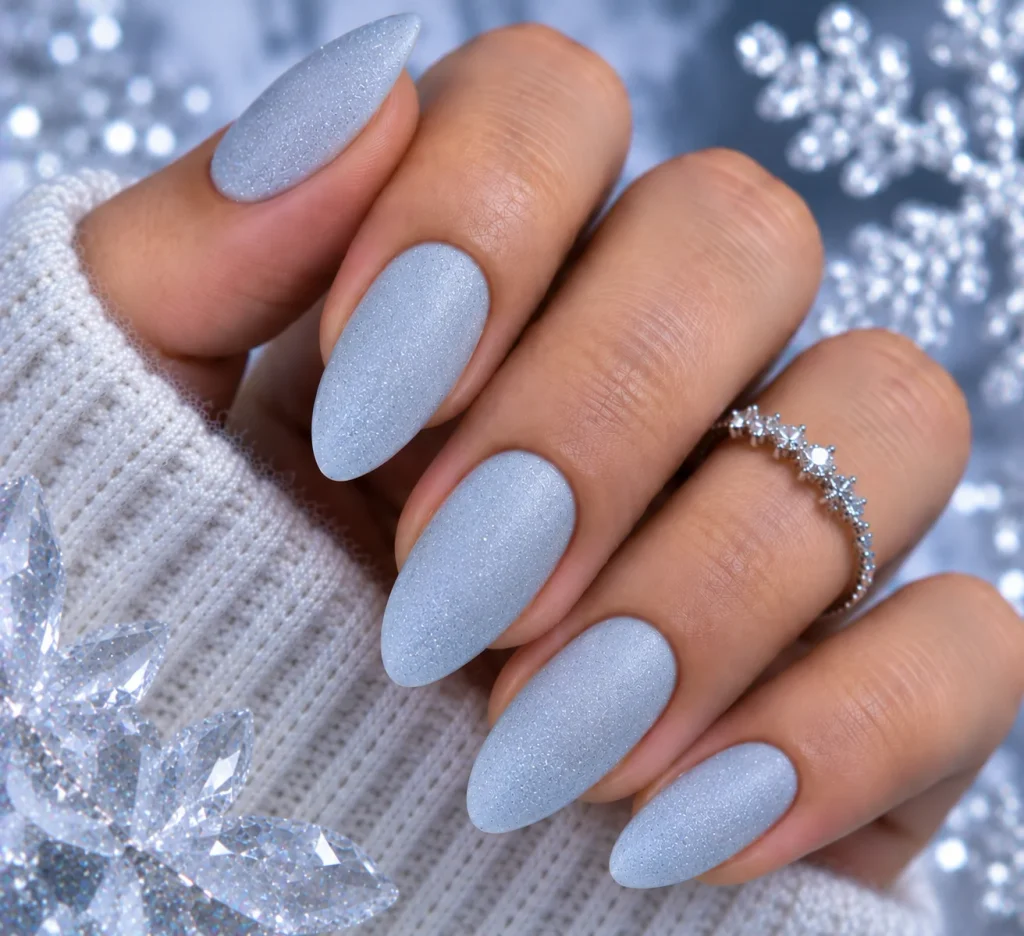
Applying a frosted matte top coat over any colored polish instantly gives it an icy, textured finish, which is one of the simplest ways to achieve the frozen nail look without changing your usual polish color at all. This technique is ideal for people who already own polish they like but want to update the finish for a colder-weather feel.
This method works especially well over pale blues, whites, and silvers, where the frosted texture enhances the existing cool tone rather than fighting against it. Because it requires no new polish colors, this is one of the most budget-friendly ways to try frozen nails at home.
19. Snow-Capped Nails
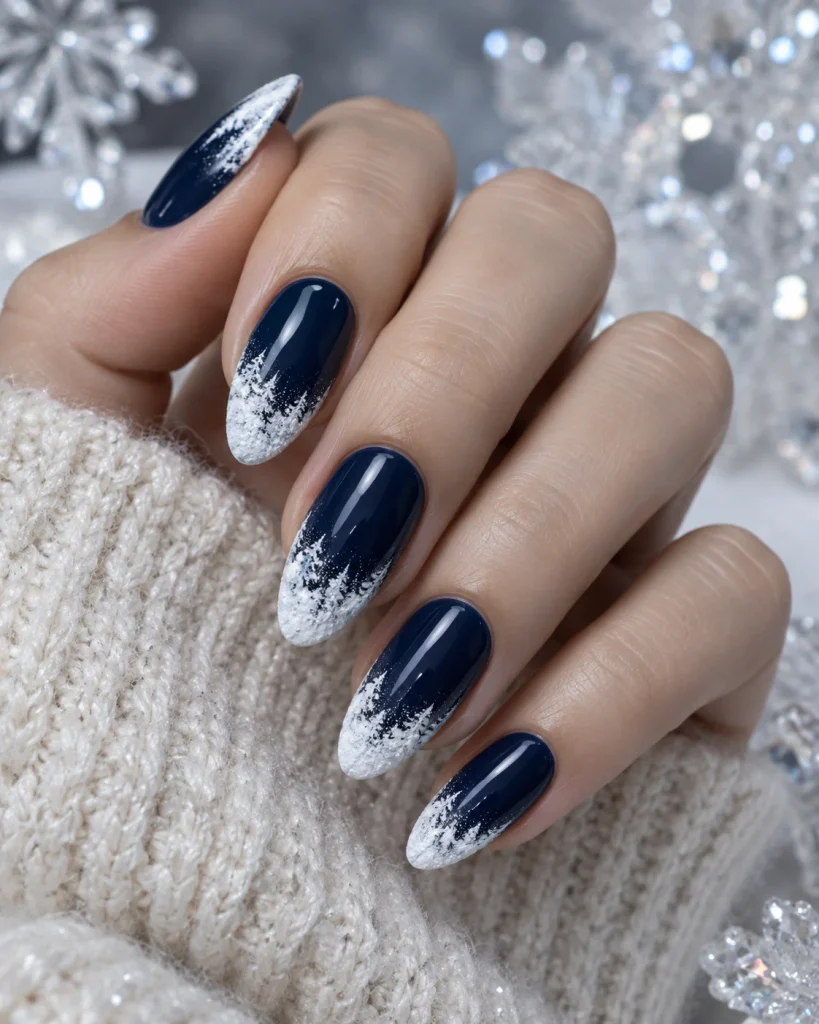
This design features white polish applied only at the tips in an uneven, textured pattern, mimicking snow sitting on top of a dark surface below it. The base color is typically a deep blue, navy, or black to create strong contrast against the white tips.
A small fan brush works well for creating the natural, uneven texture needed for this effect, since a straight edge would look too clean and structured for the intended look. Snow-capped nails tend to appeal to people who want a bolder, high-contrast take on frozen nails rather than an all-over icy shade.
20. Opal Ice Nails
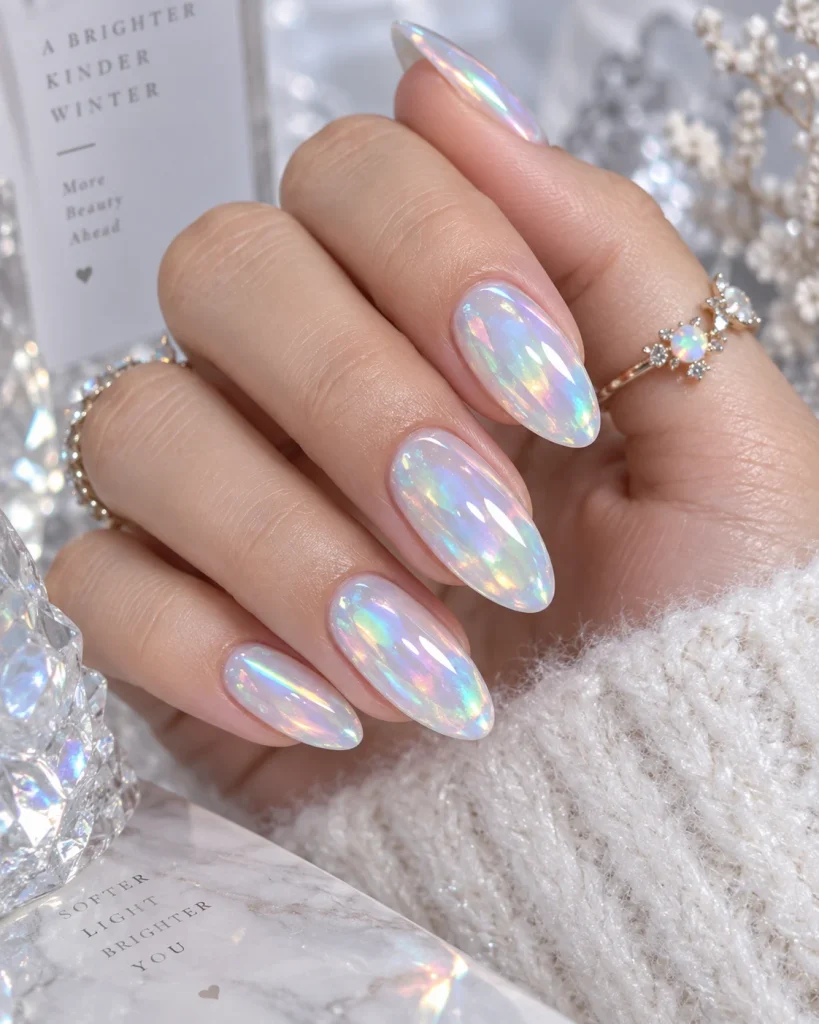
Opal-inspired polish shifts through multiple pastel colors, including blue, pink, and green, similar to the way light refracts through actual ice crystals. This design adds subtle color variation without straying far from the cool-toned frozen nails aesthetic overall.
Opal polish works best applied over a white or pale base to enhance the natural color-shifting effect built into the formula. This is one of the more unique frozen nails options for anyone who finds plain silver or white slightly too simple for their taste.
21. Silver Foil Fracture Nails
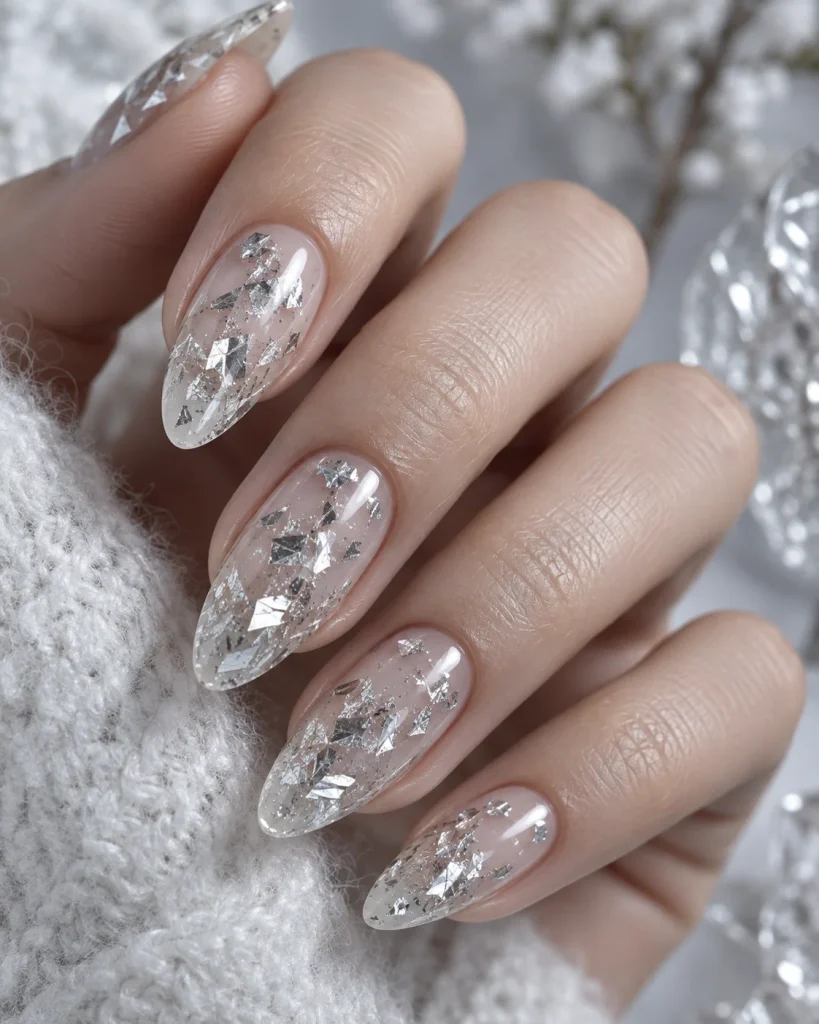
Small pieces of silver foil applied in an irregular pattern across a clear or pale base create a fractured, icy texture reminiscent of cracked ice on a windshield. This design mimics the way ice naturally splits and separates, giving each nail a distinct, non-repeating pattern across the set.
Foil adhesive is needed for this technique, but application becomes noticeably easier with a bit of practice on a spare nail tip first. This design pairs the frozen nails aesthetic with a slightly edgier, more textured finish than smoother chrome or glitter options.
22. Frozen Ombre Chrome
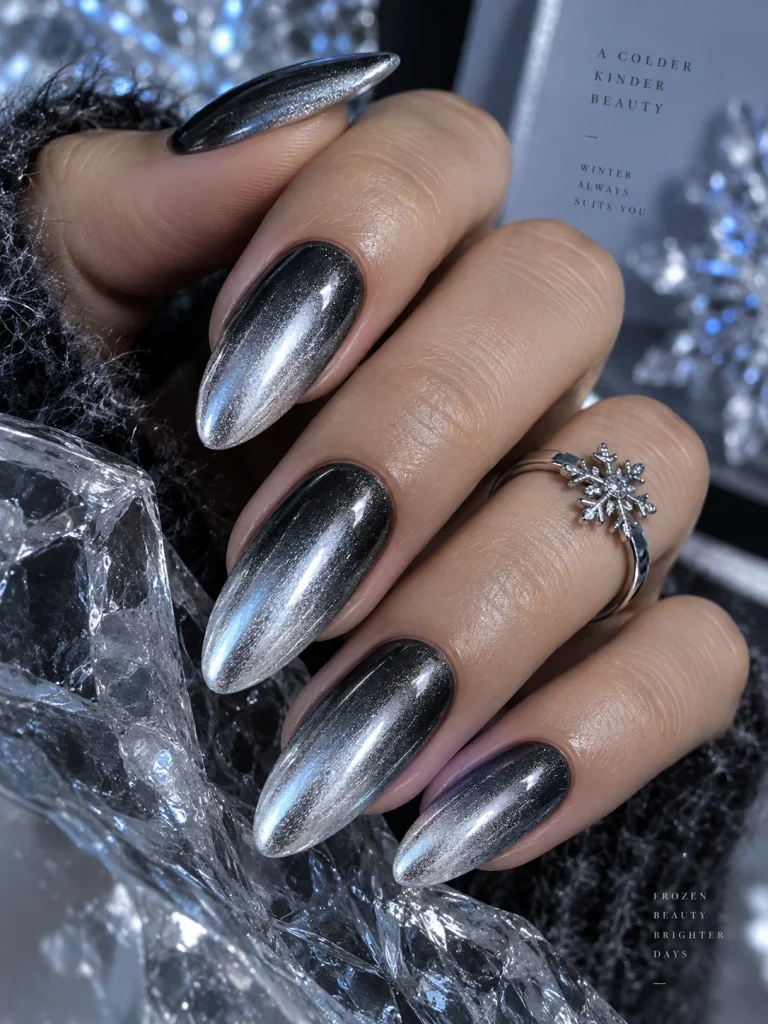
Combining an ombre gradient with a chrome finish creates a design that shifts both in color and reflectiveness across the length of the nail. This advanced technique typically fades from a darker chrome shade at the base to a lighter, icier chrome near the tip.
This look requires layering chrome powder carefully to maintain a smooth gradient without visible lines separating the two shades. Frozen ombre chrome is often considered one of the most technically demanding designs in this list, so it’s worth practicing on a nail wheel before attempting it on your actual hands.
23. Icy Negative Space Nails
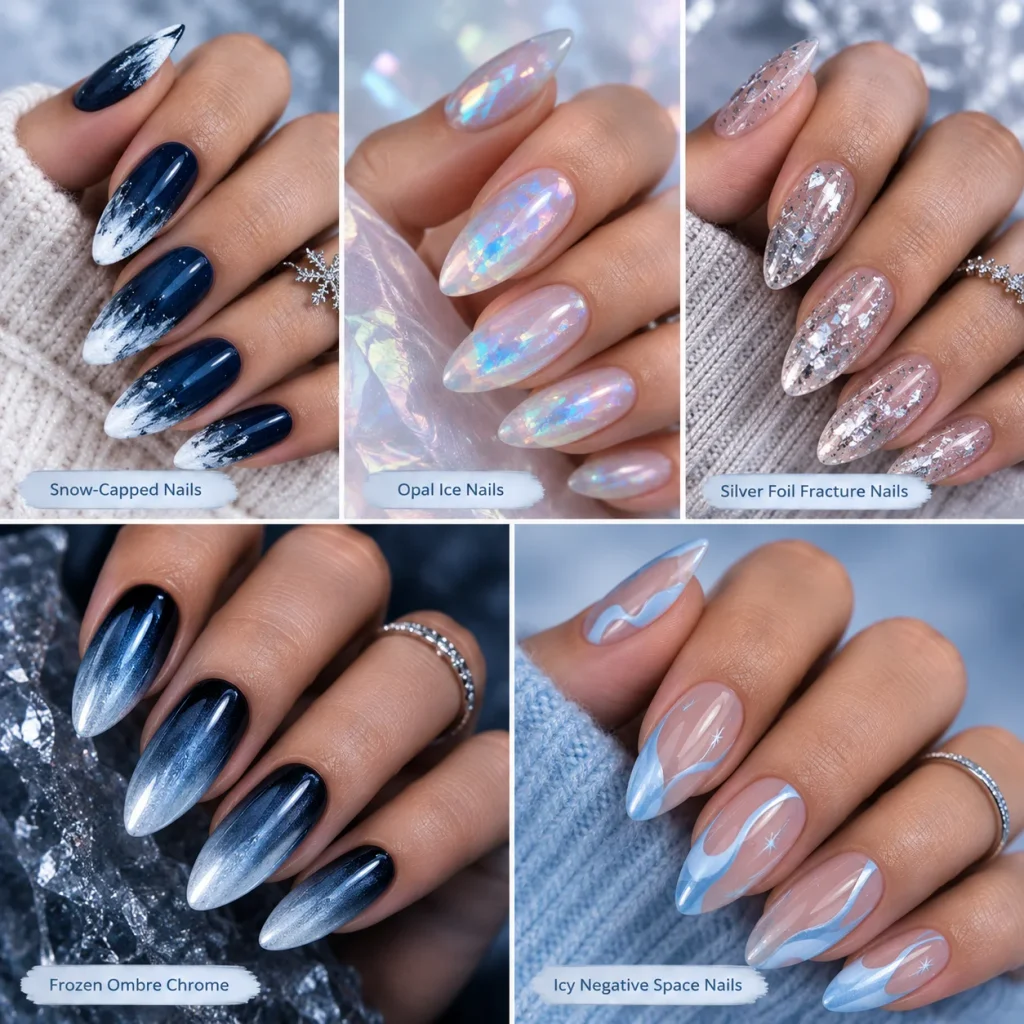
This design leaves part of the nail bare or clear while applying icy blue or silver polish to the remaining sections, creating a modern, graphic look that feels distinctly different from a fully covered manicure. Negative space designs feel fresh and contemporary within the broader frozen nails category.
This style works particularly well on square or almond nail shapes, where clean, straight lines are easier to achieve than on rounder shapes. Icy negative space nails also require less product overall, making touch-ups between salon visits simpler to manage.
24. Frozen Berry Accent Nails
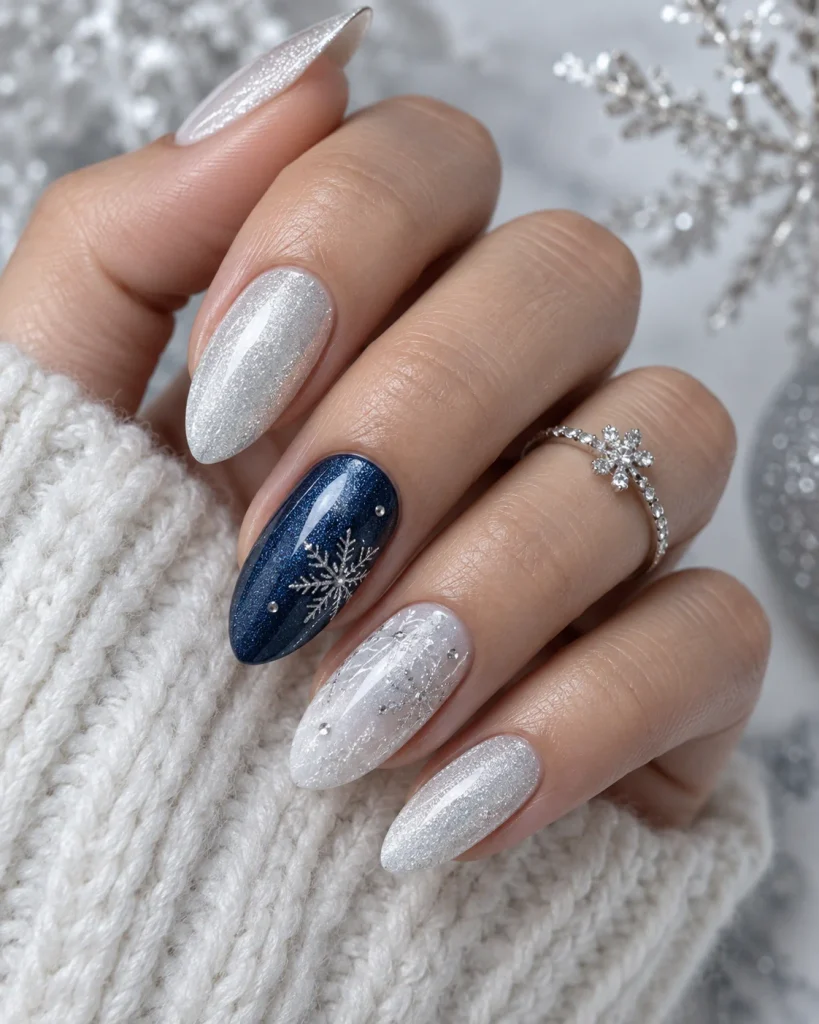
Adding a single deep blue or icy berry-toned accent nail among an otherwise silver or white set creates contrast without disrupting the overall frozen nails theme. This small detail adds visual interest while keeping the design cohesive rather than mismatched.
Choosing just one nail per hand for the accent color keeps the look balanced rather than busy or overwhelming. This approach works well for anyone who loves the frozen nails trend but also wants a small pop of deeper color somewhere in the set.
25. Reflective Glass Fleck Nails
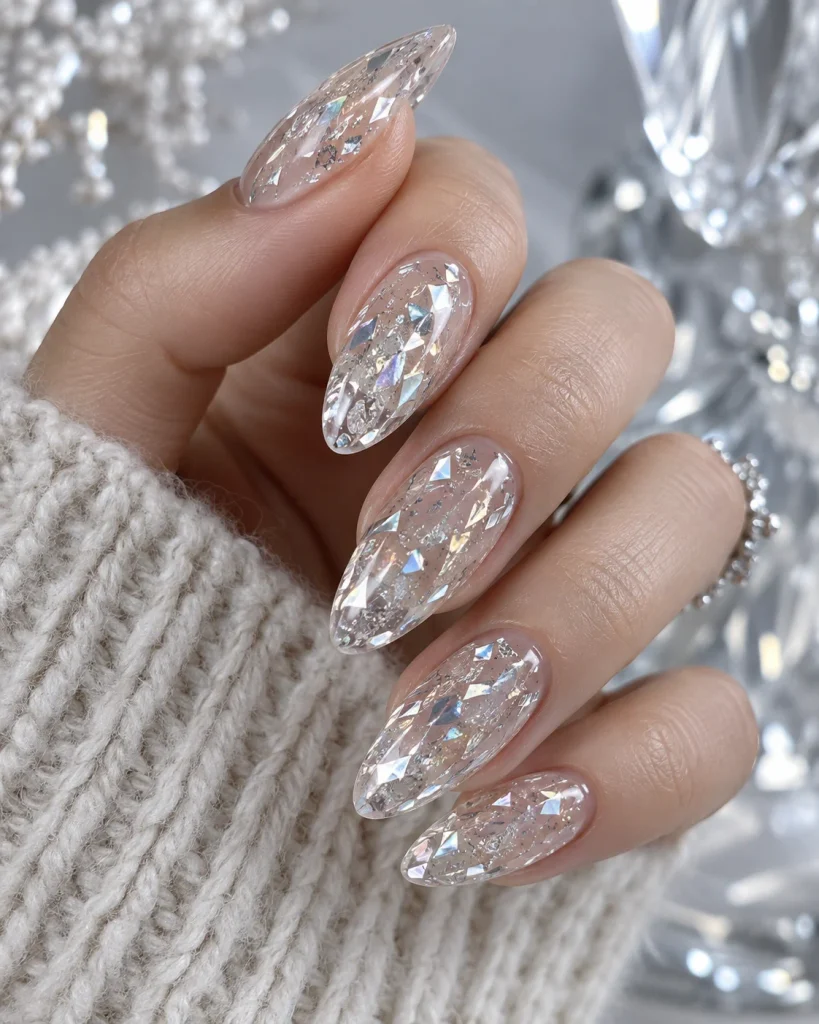
Coarse, reflective flecks embedded in a clear or pale polish create a glass-like texture that catches light dramatically from multiple angles at once. This design has more physical texture than standard glitter and creates a bolder, more dimensional take on frozen nails overall.
This technique works best applied over gel polish, since the flecks tend to sit more evenly on a smooth, fully cured base coat. Reflective glass fleck nails are often the final design people try after working through simpler frozen nails looks first, since the texture takes a bit more experience to apply evenly.
Frozen Nail Shapes That Work Best
The shape of your nails can enhance or take away from the overall frozen nails effect, so it’s worth considering shape alongside color and finish.
- Almond – Elongates the nail bed and pairs well with ombre and gradient-style frozen nails
- Square – Clean and structured, ideal for negative space and geometric frozen designs
- Coffin (Ballerina) – Long and dramatic, best suited for detailed nail art like cracked ice or marble effects
- Oval – Soft and rounded, works well with simple chrome or metallic finishes
- Round – Low-maintenance and practical, best for subtle frost or pearl finish designs
If you’re unsure which shape suits your chosen design, shorter shapes like round and square tend to make detailed nail art easier to apply and maintain over time. Longer shapes give more surface area for gradients and multi-step designs but require more upkeep as they grow out.
How Long Do Frozen Nail Designs Last?
Most frozen nails designs use gel polish, which typically lasts two to three weeks without chipping under normal daily wear. Chrome and metallic finishes tend to last just as long as regular gel polish, though they may need a fresh top coat sooner to maintain their full reflective shine.
Nail art details, like snowflakes or cracked ice lines, generally last the full two to three weeks since they’re sealed under a protective top coat layer. However, very fine details may need small touch-ups if your hands experience heavy daily wear, such as frequent hand-washing or manual work.
Regular polish versions of these frozen nails designs will last closer to five to seven days before chipping becomes noticeable, which is worth considering if you’re deciding between gel and regular formulas.
Choosing the Right Frozen Nail Design for Your Skill Level
- Beginner-friendly – Frosted white nails, metallic silver nails, crystal clear nails, frosted matte top coat nails
- Intermediate – Icicle ombre nails, frozen French tips, snowflake accent nails, pearl frost nails
- Advanced – Cracked ice nail art, marble ice nails, frozen ombre chrome, silver foil fracture nails
Starting with a simpler design and adding one new detail at a time, like a single accent nail, is the easiest way to build confidence before attempting the more advanced frozen nails looks on this list. Many people find that practicing a new technique on a plastic nail wheel first, before applying it to their actual hands, saves both time and polish.
Common Mistakes to Avoid With Frozen Nails
Even simple frozen nails designs can go wrong without a bit of preparation. Keeping these common issues in mind will help your manicure look closer to the inspiration photos you’re working from.
- Skipping the base coat – Chrome and metallic finishes show every imperfection in the nail underneath, so a smooth base coat is essential
- Applying glitter too thick – Thick glitter layers often look clumpy rather than frosted; thin, even layers photograph and wear much better
- Rushing gradient blending – Ombre and icicle designs need patience, since rushing the sponge technique leads to visible harsh lines
- Using the wrong top coat – A glossy top coat over a matte design, or vice versa, cancels out the intended texture completely
- Ignoring nail prep – Chrome powder in particular needs a fully cured, tacky surface to adhere properly, so skipping this step often causes uneven color
Taking a few extra minutes during preparation makes a noticeable difference in how professional your frozen nails end up looking, regardless of which design you choose from this list.
Frequently Asked Questions About Frozen Nails
What colors are used for frozen nails?
Frozen nails typically use icy blues, silvers, whites, and pale purples. These cool tones mimic the appearance of ice, frost, and snow far better than warm colors like red, orange, or gold ever could.
Can I do frozen nails without chrome powder?
Yes. Metallic silver polish, holographic top coats, and frosted matte finishes all create a convincing icy effect without requiring chrome powder or any special application tools.
Are frozen nails only for winter?
No. While the look is inspired by ice and frost, the cool-toned colors and reflective finishes work well year-round, especially for anyone who prefers silver and blue tones over warmer shades regardless of season.
What nail shape works best for frozen nail designs?
Almond and coffin shapes work well for detailed designs like ombre and marble effects, while square and round shapes suit simpler chrome or frosted finishes better.
How do I make frozen nails last longer?
Using gel polish instead of regular polish, applying a strong top coat, and avoiding excessive contact with hot water can all help frozen nails last the full two to three weeks without chipping.
Is chrome powder hard to apply at home?
Chrome powder has a learning curve, but applying it over a fully cured, tacky top coat with a soft sponge applicator makes the process much easier, even for complete beginners.
Do frozen nails work on short nails?
Yes. Many of the designs on this list, including frosted white, metallic silver, and pearl frost nails, look just as striking on short nails as they do on longer shapes.
What’s the difference between frozen nails and regular icy nail polish?
Regular icy polish is simply a cool-toned color, while frozen nails combine color with specific finishes and textures, like chrome, frost, or glitter, designed to mimic the actual look of ice and snow.
Final Thoughts on Frozen Nails
Frozen nails offer a fresh alternative to typical seasonal manicures by focusing on texture, shine, and cool-toned color rather than heavy decoration or intricate hand-painted art. Whether you prefer a subtle pearl frost finish or a bold cracked ice design, there’s a version of this trend that fits your personal style, your skill level, and how much time you want to spend at the nail table.
Save your favorite looks from this list, and don’t hesitate to combine elements from different designs, like pairing a chrome base with a snowflake accent nail, to create something uniquely your own. The frozen nails trend works well precisely because it’s flexible enough to feel minimal or dramatic depending entirely on how you choose to wear it, making it one of the more adaptable nail trends to keep in your regular rotation.