Weak, bendy nails that split, peel and snap are frustrating — especially when you have just grown them to a length you love. If you have ever wondered how to make nails stronger, the good news is that most nail weakness can be fixed at home. Nails are not like skin: once the nail plate is damaged, it cannot repair itself. Instead, you have to protect the nail you have while a healthy, stronger nail grows in from the cuticle.
This step-by-step guide shows you exactly how to make nails stronger with simple habits, gentle tools and a little patience. You do not need expensive salon treatments or a complicated routine. Follow the steps in order, repeat them every week, and you should notice a real difference within four to six weeks.
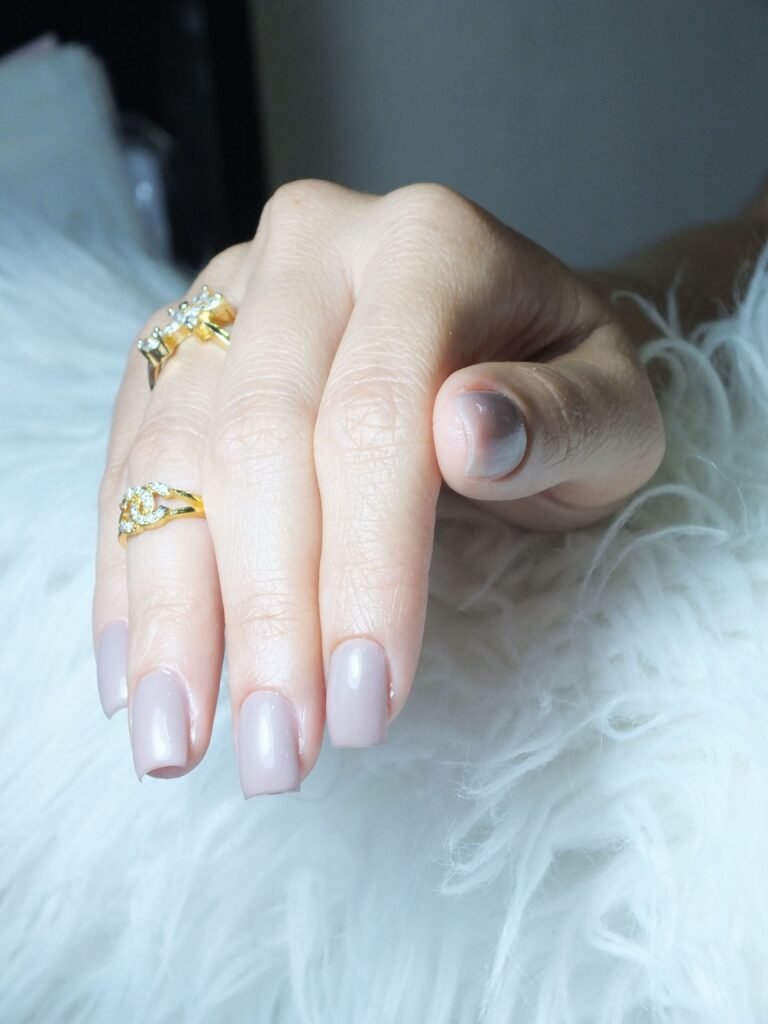
What You Will Need to Make Your Nails Stronger
Gather everything before you start — this is your kit for learning how to make nails stronger — and the whole routine takes less than twenty minutes:
- Gentle, acetone-free nail polish remover and cotton pads
- A fine-grit nail file (180 grit or higher) and a soft buffer
- Cuticle oil — jojoba or sweet almond oil both work well
- A rich hand cream
- A nail strengthener or clear base coat
- An orangewood stick and a nail clipper
- Rubber gloves for cleaning and washing up
How to Make Nails Stronger, Step by Step
Step 1: Give Your Nails a Break
Start by removing any polish with a gentle, acetone-free remover. Soak a cotton pad, press it onto the nail for a few seconds, then wipe away — never scrape or pick polish off, because that lifts layers of the nail plate with it. If you wear gel extensions, our beginner’s guide to Gel-X nails explains how they work and how to take them off without damage. Once your nails are bare, leave them polish-free for at least a week. This rest period lets you see their true condition and gives the nail plate a chance to recover from chemicals and filing.
Step 2: Trim and Shape Gently
Cut your nails to a practical length before you file them. Shorter nails break less while they are recovering, so do not be afraid to take some length off — it will grow back stronger. Hold the file at a slight angle and move it in one direction only, from the side towards the centre. Sawing back and forth creates tiny tears in the nail edge, which is how splits start. Shape the corners into a soft, rounded square or oval, and keep all ten nails the same length so pressure is shared evenly.
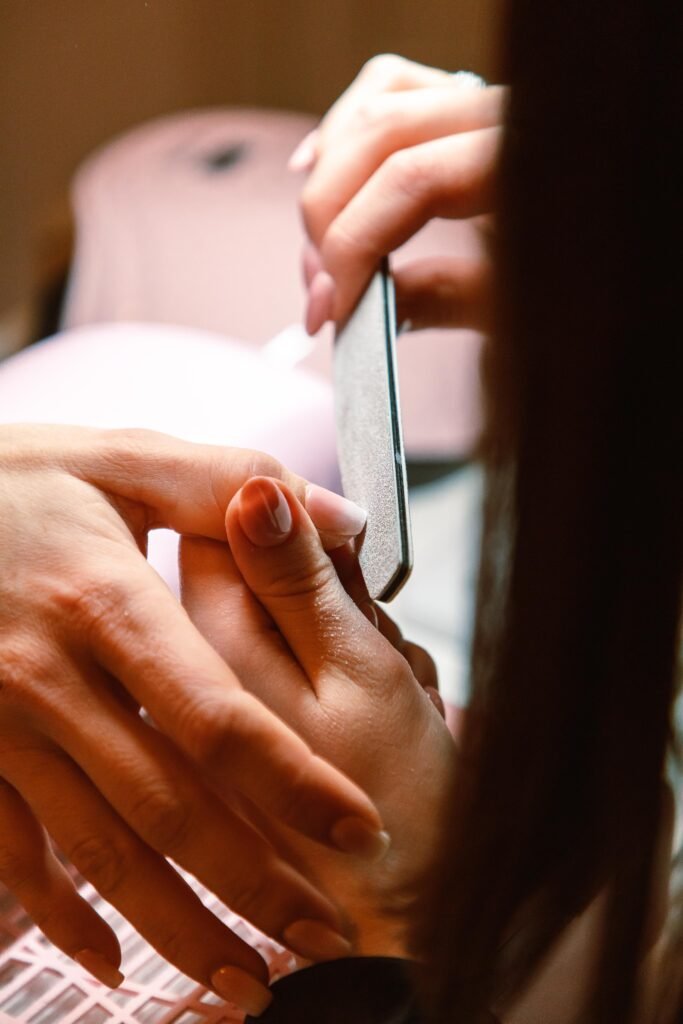
Step 3: Buff Lightly, Never Over-Buff
Buffing smooths ridges and helps treatments grip, but over-buffing thins the nail and is one of the quickest ways to weaken it. Use the finest side of a soft buffer and pass it over each nail no more than three or four times, with very light pressure. You only want to even out the surface, not remove layers. If your nails already feel thin or flexible, skip buffing altogether for a few weeks until they feel firmer.
Step 4: Oil Your Cuticles Every Day
Dry cuticles are one of the main causes of peeling and breakage, because the nail plate grows out of the cuticle area. Massage one drop of cuticle oil into each nail and cuticle at least once a day — last thing at night is ideal, because the oil can sink in undisturbed. Rub it in with small circles for a few seconds per nail. Daily oiling keeps the nail plate flexible rather than brittle, and it also stops hangnails and ragged cuticles from forming.
Step 5: Apply a Strengthening Treatment
A strengthening treatment fills in tiny ridges and gives weak nails a protective shield while they recover. Apply one thin coat of a nail strengthener or clear base coat to clean, dry nails, and reapply a fresh thin coat every two or three days. Remove it all once a week and start again. Look for formulas with keratin or calcium, and avoid anything that contains formaldehyde, which can make nails brittle with long-term use. If your nails feel very soft, use the treatment on its own rather than under coloured polish for the first few weeks.
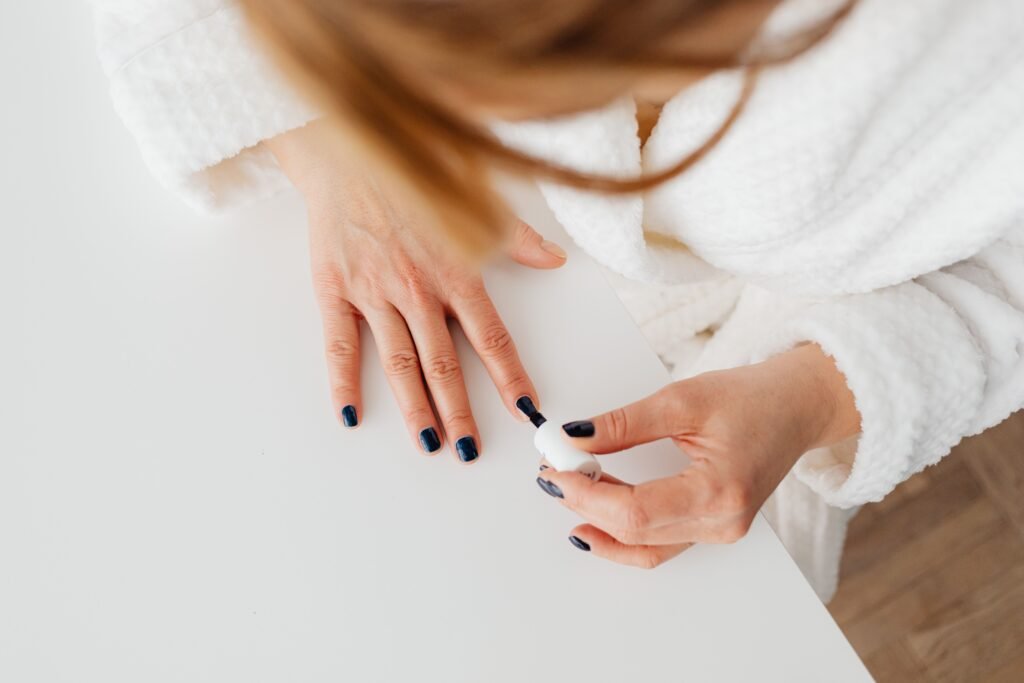
Step 6: Protect Your Hands Every Day
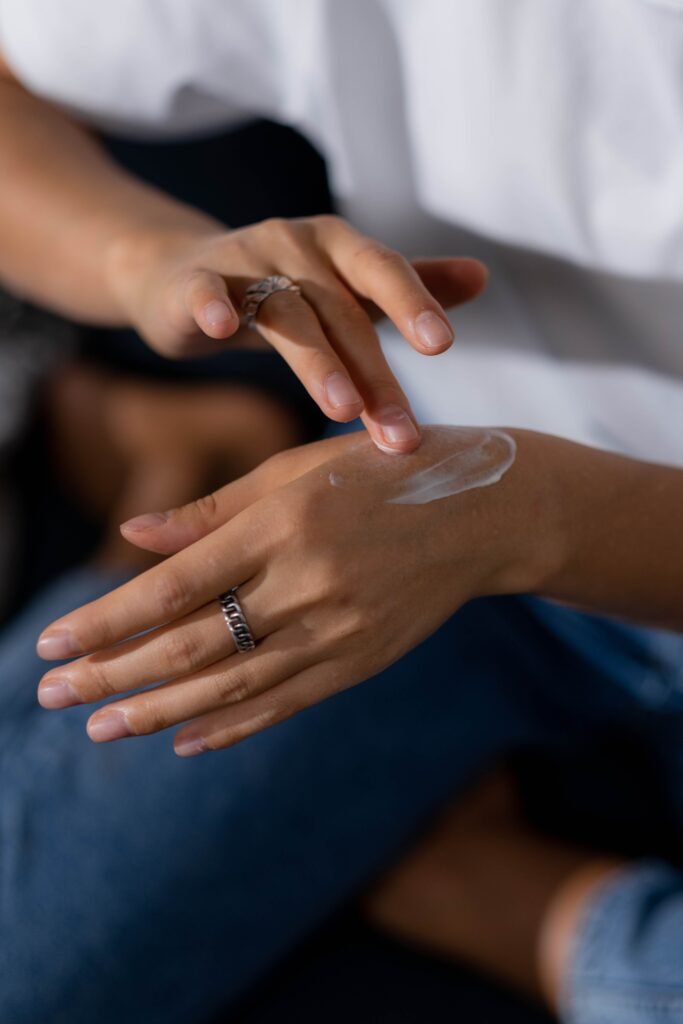
Water is surprisingly hard on nails. When nails soak, they swell, and as they dry they contract — and that repeated swelling and shrinking weakens the nail plate over time. Wear rubber gloves for washing up, cleaning and laundry, and keep showers and baths as short as is practical. When you wash your hands, use a mild soap, pat them dry rather than rubbing, and apply hand cream straight away. Also, stop using your nails as tools: opening cans, scraping labels and prising things apart all cause chips and splits.
Step 7: Feed Your Nails from Within
Nails are made mostly of keratin, a protein, so what you eat matters. Aim for a balanced diet with enough protein — eggs, fish, beans, lentils and dairy all help — plus foods rich in biotin, iron and zinc, such as nuts, seeds, leafy greens and wholegrains. Drink enough water through the day, because dehydrated nails are brittle nails. Supplements can help if your diet is low in these nutrients, but talk to your GP or pharmacist first. Be patient: fingernails grow only about three millimetres a month, so a fully new, stronger nail takes four to six months to grow in.
What NOT to Do If You Want Stronger Nails
Some habits undo all the good work above. Avoid these five mistakes while your nails are recovering:
- Peeling off gel, dip powder or acrylics. Peeling lifts the top layers of your natural nail with it. Always soak enhancements off gently.
- Biting your nails or picking at the skin around them, which damages the nail bed and invites infection.
- Filing aggressively with a coarse or metal file, or sawing the file back and forth.
- Using acetone-based remover every day, which dries the nail plate out.
- Skipping base coat under coloured polish, which lets pigment stain and dry the nail.
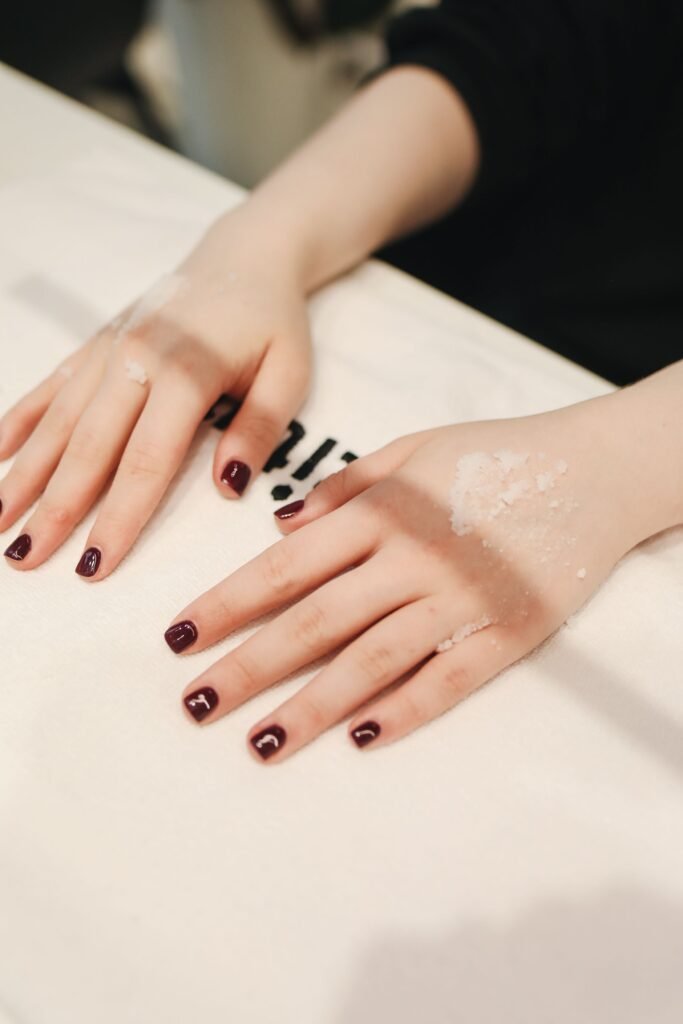
Aftercare Tips for Stronger Nails
Keep the routine going once your nails start to feel stronger. Keep oiling your cuticles nightly, reapply hand cream after every wash, and keep your nails at a length that suits your daily life — shorter is stronger. When you are ready for colour again, choose gentle options and give your nails a polish-free break every few weeks.
Consistency is the real secret of how to make nails stronger. For inspiration, explore our dip nails ideas or learn how to do French tips at home — both are kind to nails when they are applied and removed properly. If a nail keeps splitting in the same place, or the skin around it stays red and sore, see a pharmacist or your GP, as it can sometimes be a sign of a fungal infection or a vitamin deficiency. The NHS has guidance on common nail problems if you are worried about a nail that will not heal.
Conclusion
Learning how to make nails stronger is less about one miracle product and more about small, gentle habits repeated every day. Rest your nails, file them kindly, oil them daily and protect them from water and chemicals, and stronger nails will follow. Start tonight with a drop of cuticle oil, and give your nails the four to six weeks they need to grow in healthy.